
Close
All Filters
Filter by

Cornish Lime CLM28F Fibered Coarse Putty Mortar & Basecoat Render
A fibered mortar and render with a coarse texture for building or as a basecoat renders.
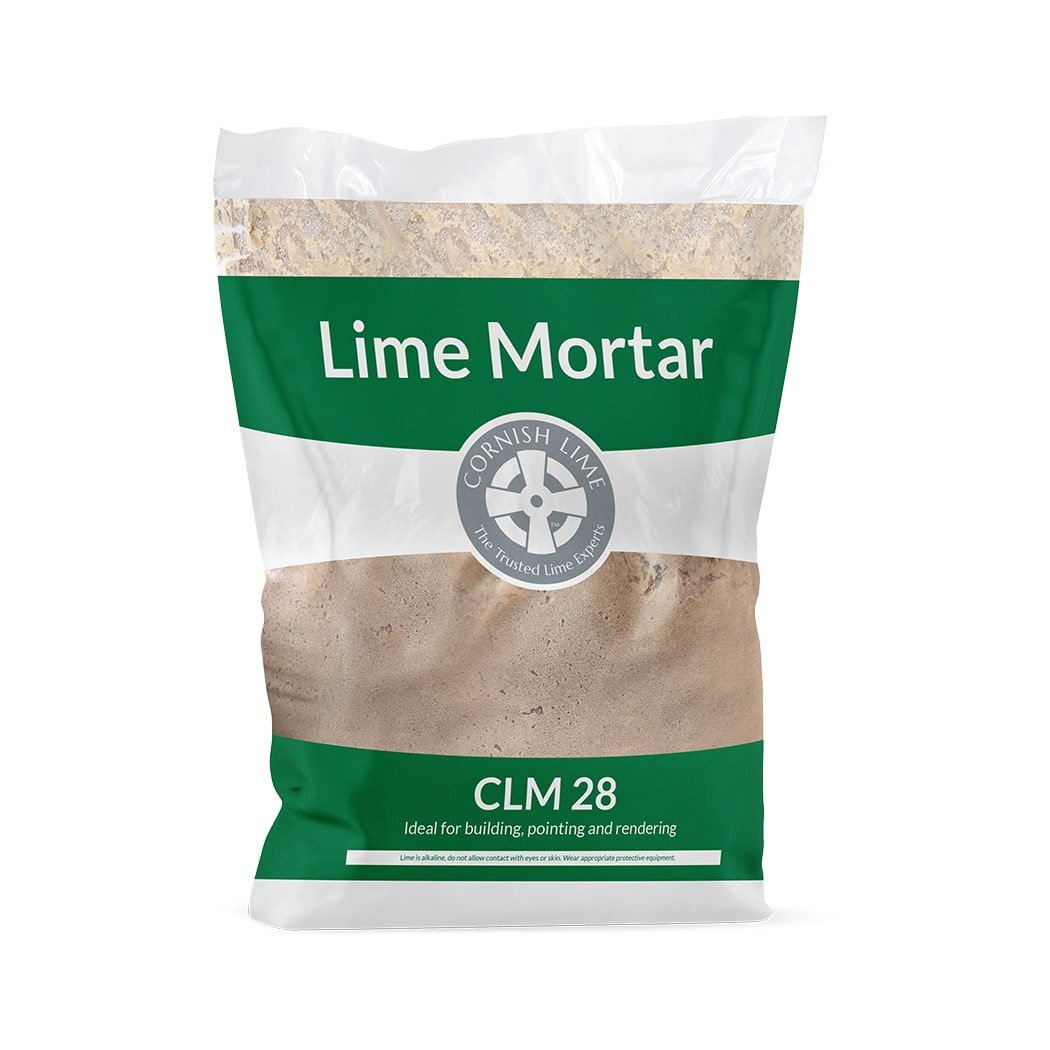
Cornish Lime CLM28 Coarse Lime Putty Mortar & Basecoat Render
A popular coarse buff multipurpose mortar and render for building work or as a basecoat render.
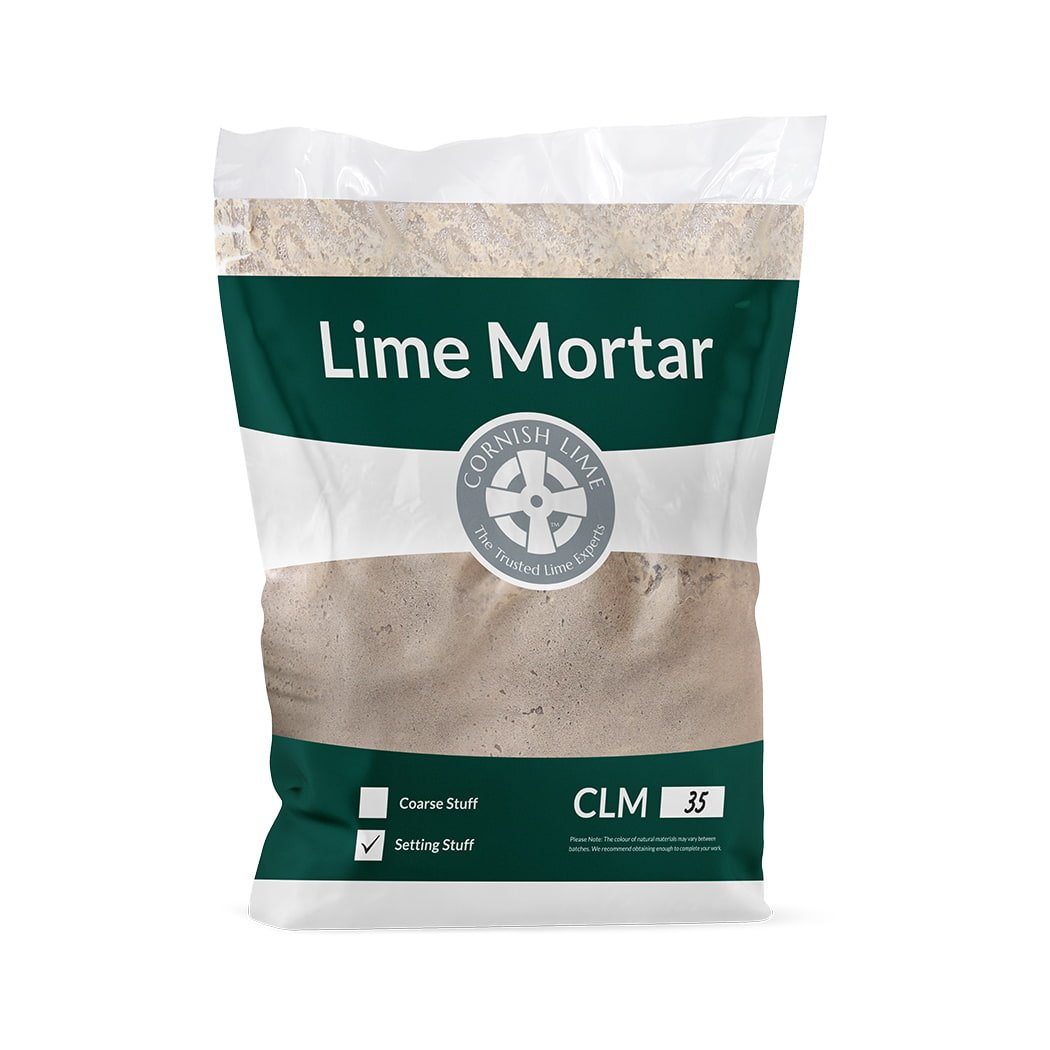
Cornish Lime CLM35 Fine Lime Putty Mortar & Topcoat Render
A multipurpose mortar and render with a fine texture and buff coloured finish for narrow joint.

Cornish Lime CLM66 Superfine Putty Finishing Plaster
A smooth internal finishing plaster with a superfine texture and refined natural white finish.
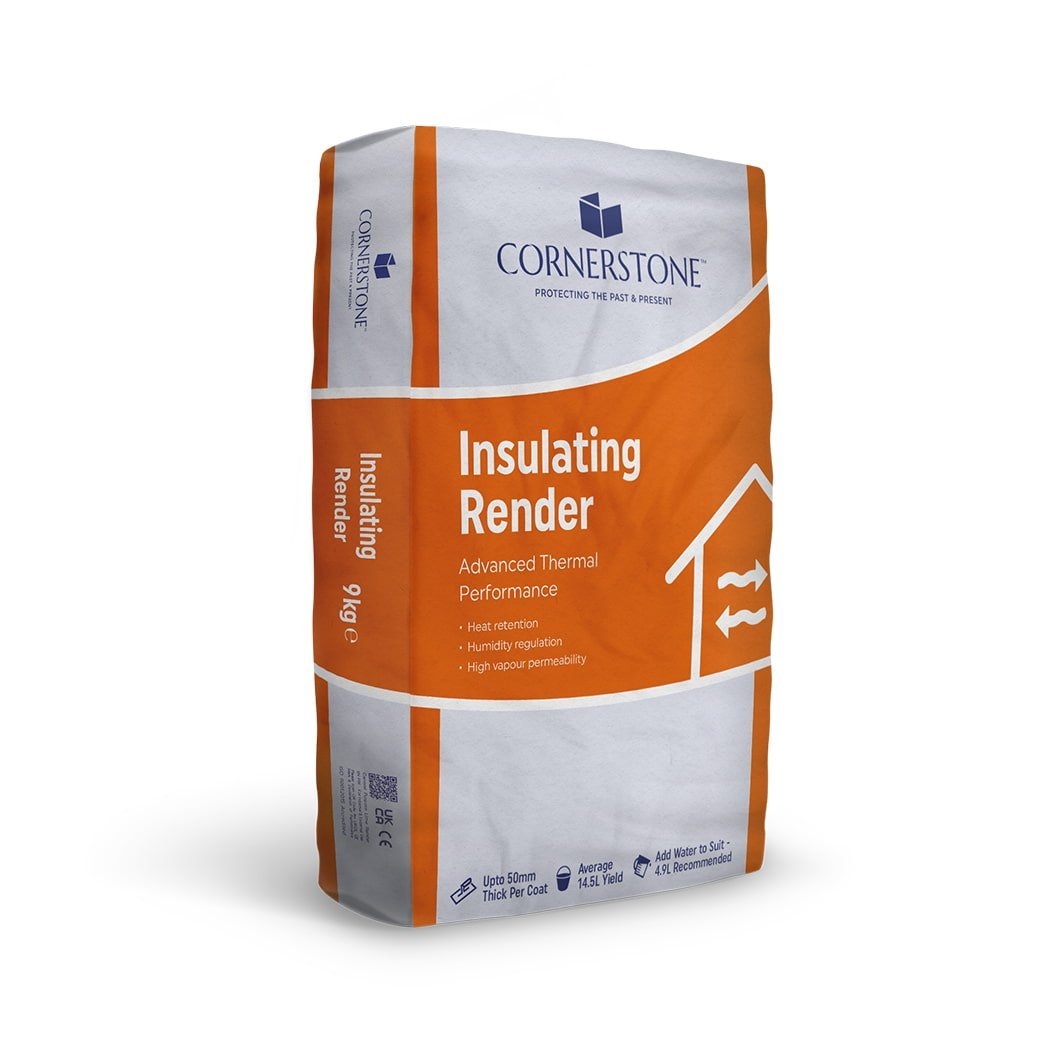
Cornerstone Insulating Render
A fibred render & plaster to enhance thermal performance moisture management in a white finish.

Cornerstone SuperTherm Plaster
An ultra-lightweight and low density fibred plaster for the thermal insulation of solid walls.

Cornerstone SuperTherm Topcoat Plaster
A refined creamy topcoat with a off-white finish for internal applications with SuperTherm.
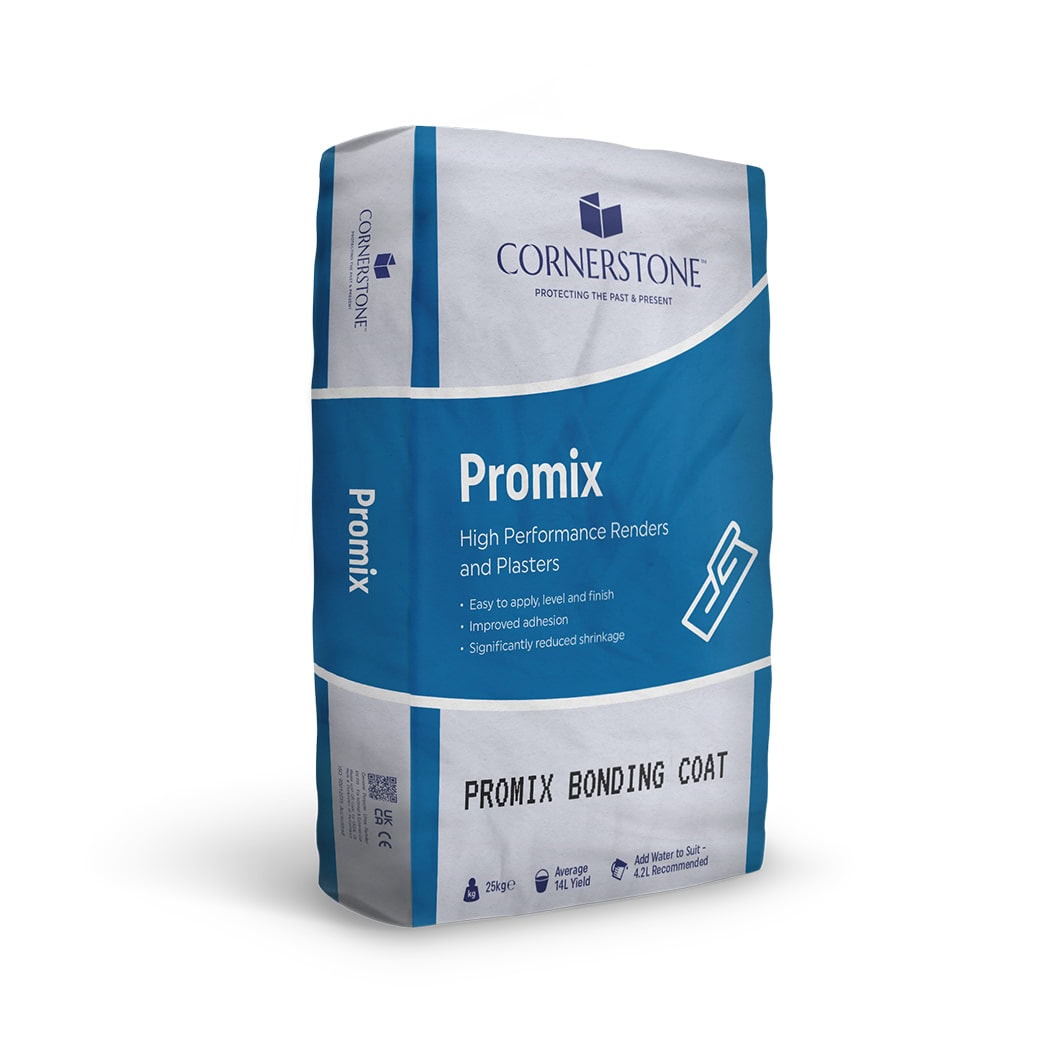
Cornerstone Promix Bonding Coat Render & Plaster
A coarse texture and buff colour for challenging backgrounds or as a highly textured finish.

Cornerstone Promix Traditional Basecoat Render
A traditional coarse texture and buff coloured finish for a coarse basecoats or float coats.

Cornerstone Promix Coarse Basecoat Render & Plaster
A coarse basecoat with white finish for basecoats, float coats or textured finish coats.

Cornerstone Promix Fibered Basecoat Render & Plaster
A fibred basecoat for improved stress distribution to reduce cracking and plastic shrinkage.

Cornerstone Promix Medium Topcoat Render & Plaster
A traditional medium textured topcoat with a tan finish for internal or external finish coats.
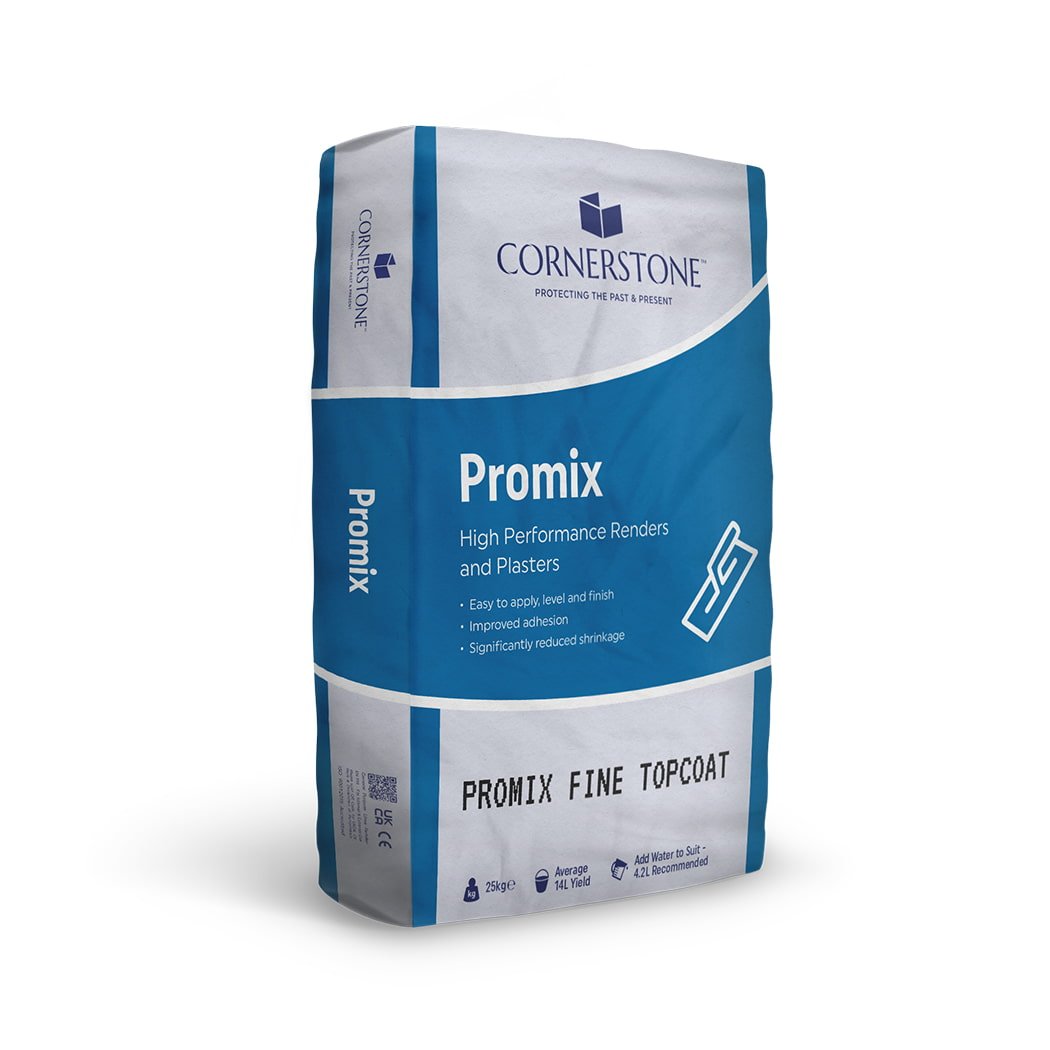
Cornerstone Promix Fine Topcoat Render & Plaster
A fine textured topcoat with a light brown finish for internal and external finish coats.

Cornerstone Promix Superfine Finishing Plaster
A popular superfine texture and off-white finish for a smooth and satisfying internal finish.
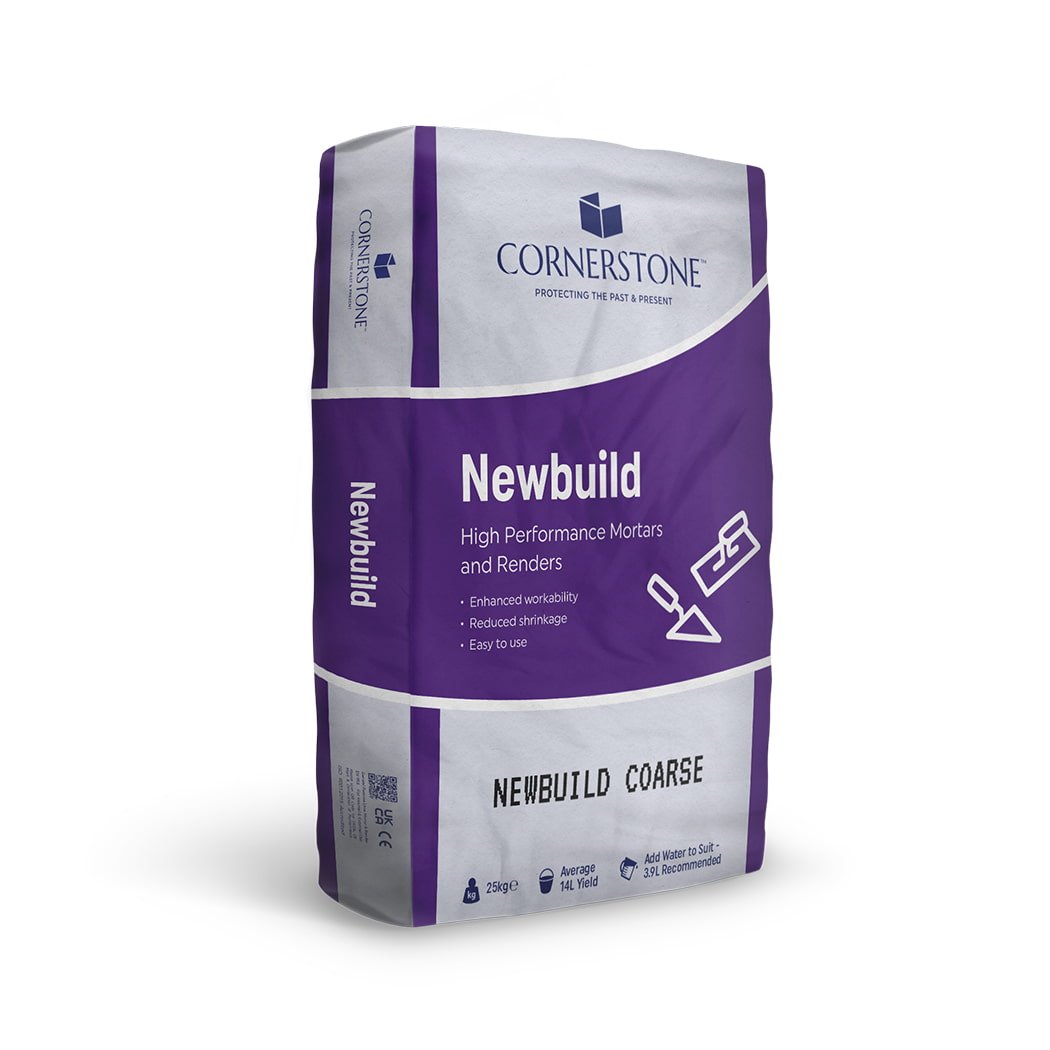
Cornerstone Newbuild Coarse Mortar and Render
A multipurpose hydraulic lime mortar & render with a coarse texture & buff finish for pointing.
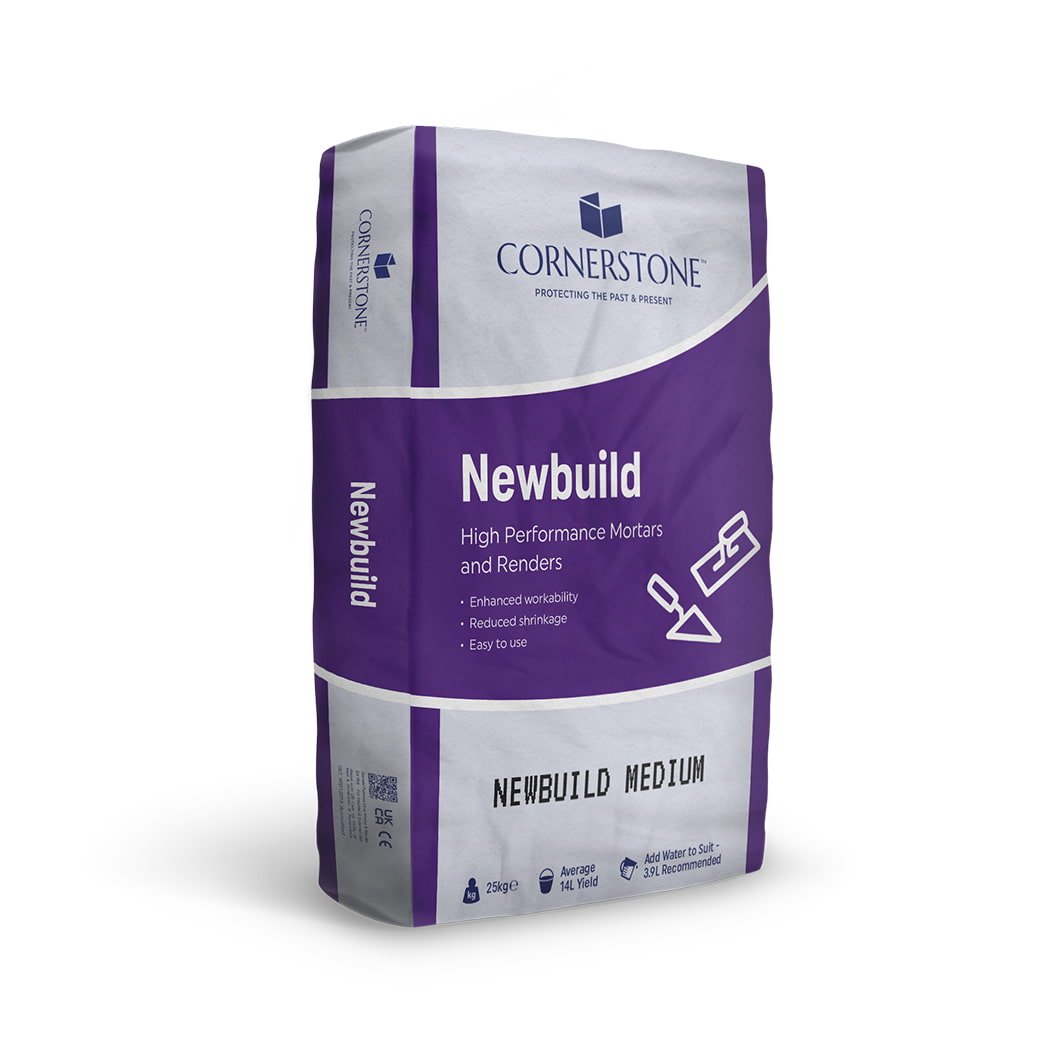
Cornerstone Newbuild Medium Mortar and Render
A multipurpose hydraulic lime mortar & render with a medium texture & buff finish for pointing.

Cornerstone Performance Torching Render
A fibered torching render for back plastering slate or natural roofing tiles with a speedy set.

Cornerstone Performance Tyrolean Render
A robust decorative and protective weather-resistant render with a distinctive textured finish.

Cornerstone Performance Tanking Render
A fast-setting, waterproof and sulphate-resistant render for internal areas exposed to water.

Cornerstone Performance Wintermix Mortar & Render
A multipurpose mortar and render for rapid initial strength gain to support frost resistance.
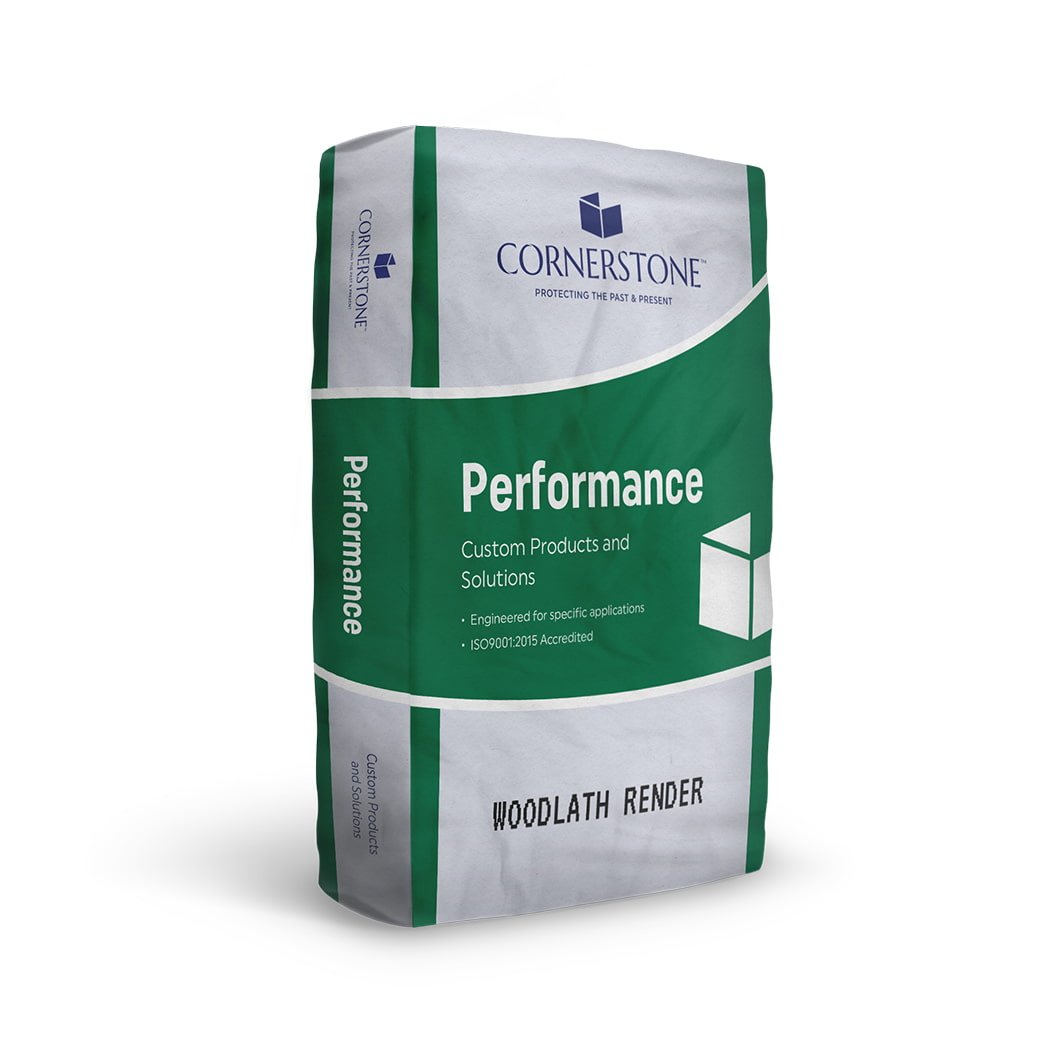
Cornerstone Performance Woodlath Render
A fibered basecoat lime render for traditional woodlath with a speedy and secure set.

Cornerstone Heritage MK Coarse Mortar and Render
A multipurpose high free-lime mortar for an ultra-breathable & porous alternative to hot mix.

Cornerstone Heritage MK Medium Mortar and Render
A multipurpose high free-lime mortar for an ultra-breathable & porous alternative to hot mix.

Cornerstone Heritage Trass Coarse Mortar and Render
A multipurpose high vapour permeability & low capillary water absorption for exposed areas.

Cornerstone Heritage Trass Medium Mortar and Render
A multipurpose high vapour permeability & low capillary water absorption for exposed areas.
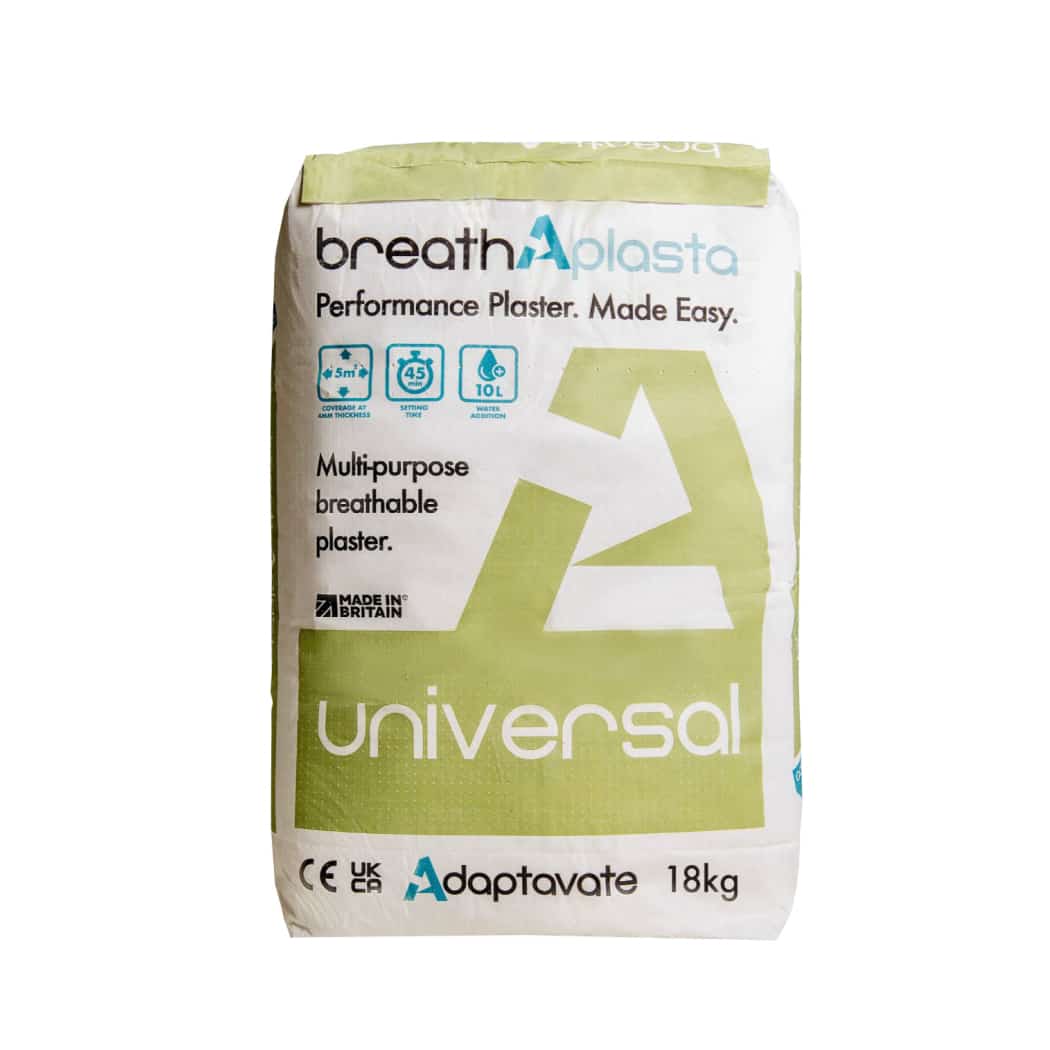
Adaptavate Breathaplasta Universal
A fast-set, multi-purpose hemp-lime plaster for rapid build-up on wide range of backgrounds

Adaptavate Breathaplasta Smooth
A fine, lime-based finishing plaster, ideal for achieving a smooth or fine-polished finish.
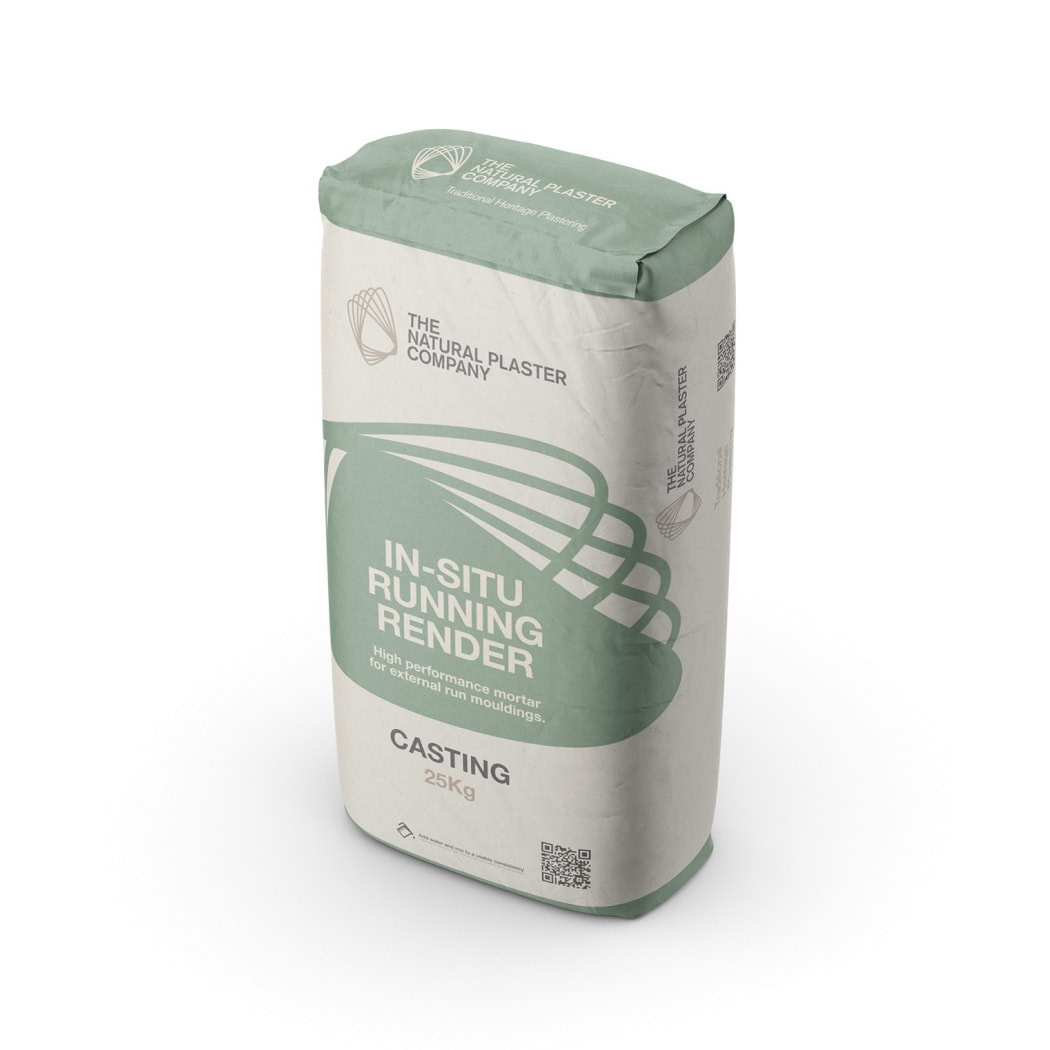
The Natural Plaster Company In-situ Running Render Casting Blend
A rapid-set, natural cement blend for decorative casting elements.

The Natural Plaster Company In-situ Running Render Muffle Coat
A rapid-set, natural cement blend muffle coat for decorative plaster mouldings.

The Natural Plaster Company In-situ Running Render Top Coat
A rapid-set, natural cement blend topcoat for decorative plaster mouldings.

The Natural Plaster Company Primer & Adhesive
A paint-on slurry that improves bonding and adhesion.
Why use lime render or plaster?
Lime renders and plasters are made from lime, sand and water and have been used by various civilisations worldwide for millennia. Historically in the UK, traditionally built solid-walled stone, brick, lath, reed or cob buildings were often built with lime mortar and then lime rendered and plastered.
Known for their breathability, flexibility and durability, lime renders and plasters have long been essential in the internal sympathetic repair, restoration and conservation of walls and ceilings. Externally they can function as a sacrificial layer for conserving stone masonry, brick or cob, where inappropriate materials can lead to damage that can be challenging to repair or even irreversible.
Unlike modern cavity wall construction, which features an outer layer and air gap designed to keep out moisture, solid-walled buildings require breathable materials to manage the moisture always present within the building fabric. As a result, modern cement-based renders and plasters are incompatible with these buildings as they are impermeable, often trapping moisture within the structure instead of allowing it to move or pass through. As a result, common issues usually found in historic or mid-20th-century buildings arise, such as condensation, damp, mould, mildew or decay. Further, this trapped moisture can lead to significant structural damage for cob, earth or timber buildings.
Traditional buildings naturally move and settle, and brittle cement renders and plasters can often struggle to accommodate this. As a result, they can introduce extra stress into the structure, leading to movement cracking that allows water to enter or causing the plaster or render to delaminate.
On the other hand, lime renders and plasters are softer, flexible and porous, making them a compatible and sympathetic material that is both permeable and capable of accommodating movement and protecting the long-term health of the building fabric.
Aesthetically, lime renders and plasters can present various finishes to traditional and modern buildings. From different colours and textures to stylish straight modern edges to classic natural curved and smooth features, these materials allow for a diverse aesthetic appeal of a building.
Today there is a renewed interest and appreciation for the properties and benefits that lime renders and plasters can bring to modern cavity wall construction. Lime renders and plasters are attractive; they can assist with moderating humidity, improving insulation, reducing energy demand, and supporting more sustainable building practices by managing moisture and accommodating building movement, which, most importantly, helps to create longer-lasting and healthier buildings.
Our extensive selection of premixed lime renders and plasters features a range of solutions for building conservation, renovation, modern new-build construction, or even winter working. Need help determining which render or plaster to use? Our in-house expert team can recommend a suitable render or plaster for your project. Buy online or open a trade account with convenient local and nationwide delivery available.
Need support? Get in touch with the team.
Get In TouchFAQs
There are several reasons why a lime render or plaster might be suitable for use in a project. Historic or heritage buildings featuring traditional materials such as lath, stone, or cob will benefit from a lime render or plaster. Unlike modern cavity wall construction, solid walled buildings lack an air gap to assist with moisture management and therefore require breathable materials. In addition, solid walls also undergo regular thermal movement, and the high flexibility of lime render and plaster can accommodate this movement. Lastly, lime has a distinctive natural appearance, which can add character and style to the building.
Each material offers advantages, which might work better, comes down to the requirements of the building. Lime render and plaster are beneficial for historic and solid walled structures that require materials that allow moisture movement, helping to prevent moisture from becoming trapped, which could cause potential damage. Further, these buildings also benefit from the flexibility of lime to accommodate building movement. Cement renders and plasters provide high strength and durability and are well-suited for modern construction. However, these are often too rigid and hard and don’t allow for sufficient moisture movement, which is detrimental in the long term.
Defining one material as better than the other would be misleading; instead, determining which material is more suitable should be based on the building requirements. Generally, lime plaster is ideal for solid-walled buildings that require compatibility with traditional construction materials and moisture management. Gypsum plaster, on the other hand, is well-suited for interior walls and ceilings in modern cavity wall construction. Nevertheless, lime plaster can also be used for modern buildings and is favoured by those looking for the natural aesthetic lime can provide.
There is no ‘best’ or ‘one size fits all’ mix for lime renders or plasters. We always advise that each project is unique, and the mix should be application specific. Another option instead of mixing on-site is to use a premixed lime render or plaster. When choosing a premixed option, review the features and application guidance, as these materials are often specially designed for performance in particular applications.
Lime renders and plasters can help better manage moisture problems, but to claim it stops damp is an overstatement. These materials assist with the movement of moisture in solid wall construction, which, unlike modern construction, doesn’t feature an air gap. By helping to reduce moisture from becoming trapped within the building fabric, lime renders and plasters help manage internal condensation and reduce moisture penetration from the external environment. Remember that there are many causes of damp, so while using these materials might be beneficial, determining the cause of the damp and considering the options to correct it is the best first step.