Close
All Filters
Filter by
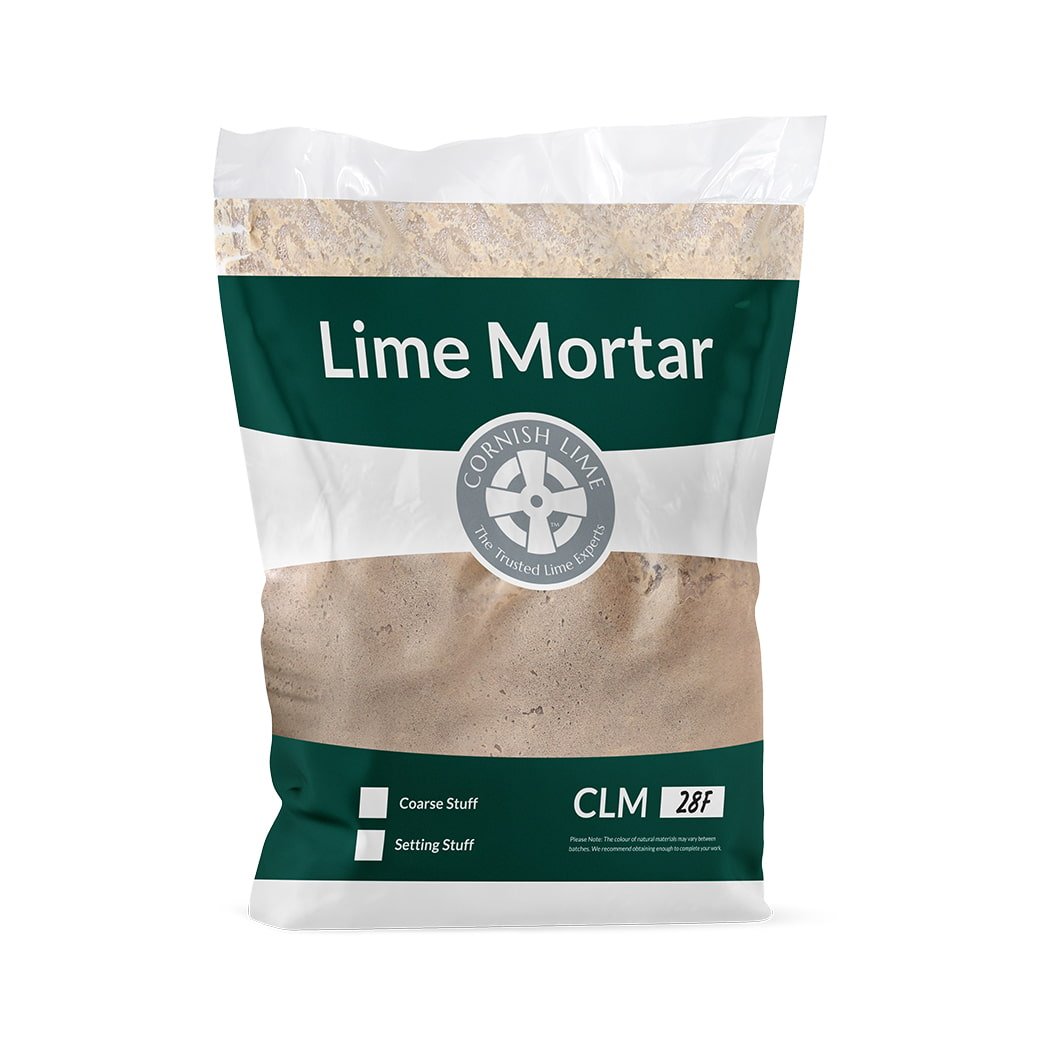
Cornish Lime CLM28F Fibered Coarse Putty Mortar & Basecoat Render
A fibered mortar and render with a coarse texture for building or as a basecoat renders.
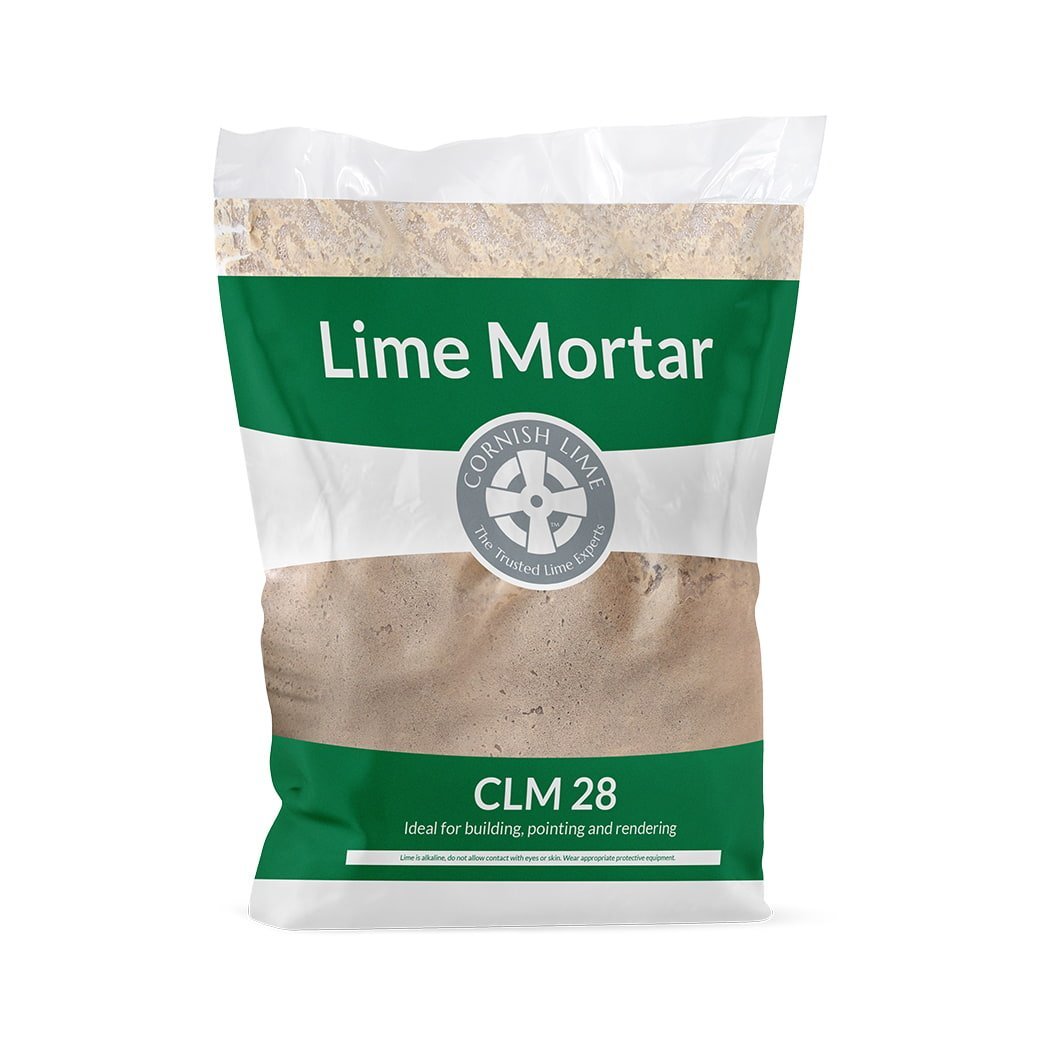
Cornish Lime CLM28 Coarse Lime Putty Mortar & Basecoat Render
A popular coarse buff multipurpose mortar and render for building work or as a basecoat render.
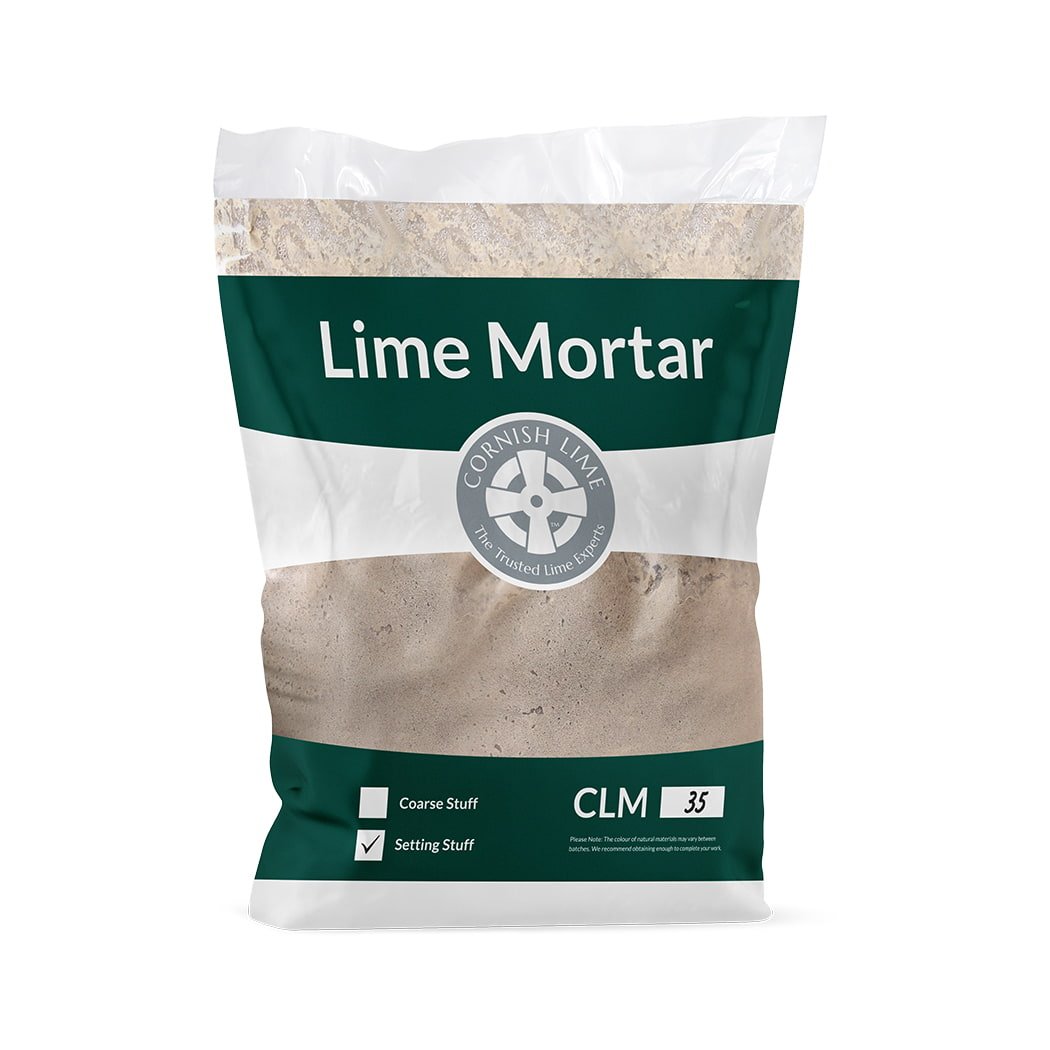
Cornish Lime CLM35 Fine Lime Putty Mortar & Topcoat Render
A multipurpose mortar and render with a fine texture and buff coloured finish for narrow joint.

Cornerstone Drymix Coarse Mortar
A coarse texture and refined buff coloured finish, well-suited for stonework and large joints.

Cornerstone Drymix Medium Mortar
A buff mortar with medium texture for a traditional finish well-suited for various joint sizes.

Cornerstone Drymix Brickwork Mortar
A medium textured and buff coloured mortar for porous high-suction bricks.

Cornerstone Drymix Pointing Gun Mortar
A buff mortar with a medium texture and or efficiency, precision and a speedy finishing time.

Cornerstone Drymix Tamar Blend Mortar
A pale grey mortar replicating the historic mortars of the Southwest's Tamar Region.
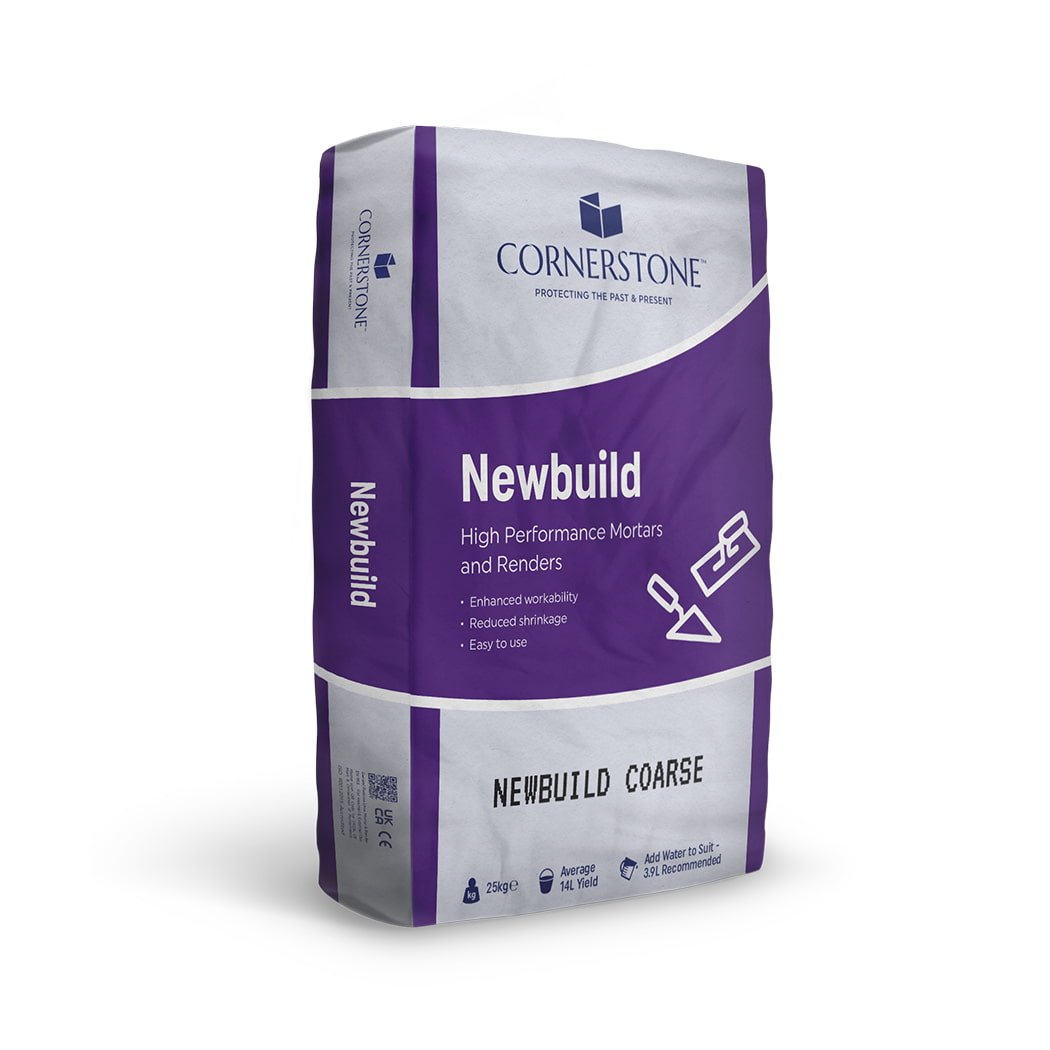
Cornerstone Newbuild Coarse Mortar and Render
A multipurpose hydraulic lime mortar & render with a coarse texture & buff finish for pointing.
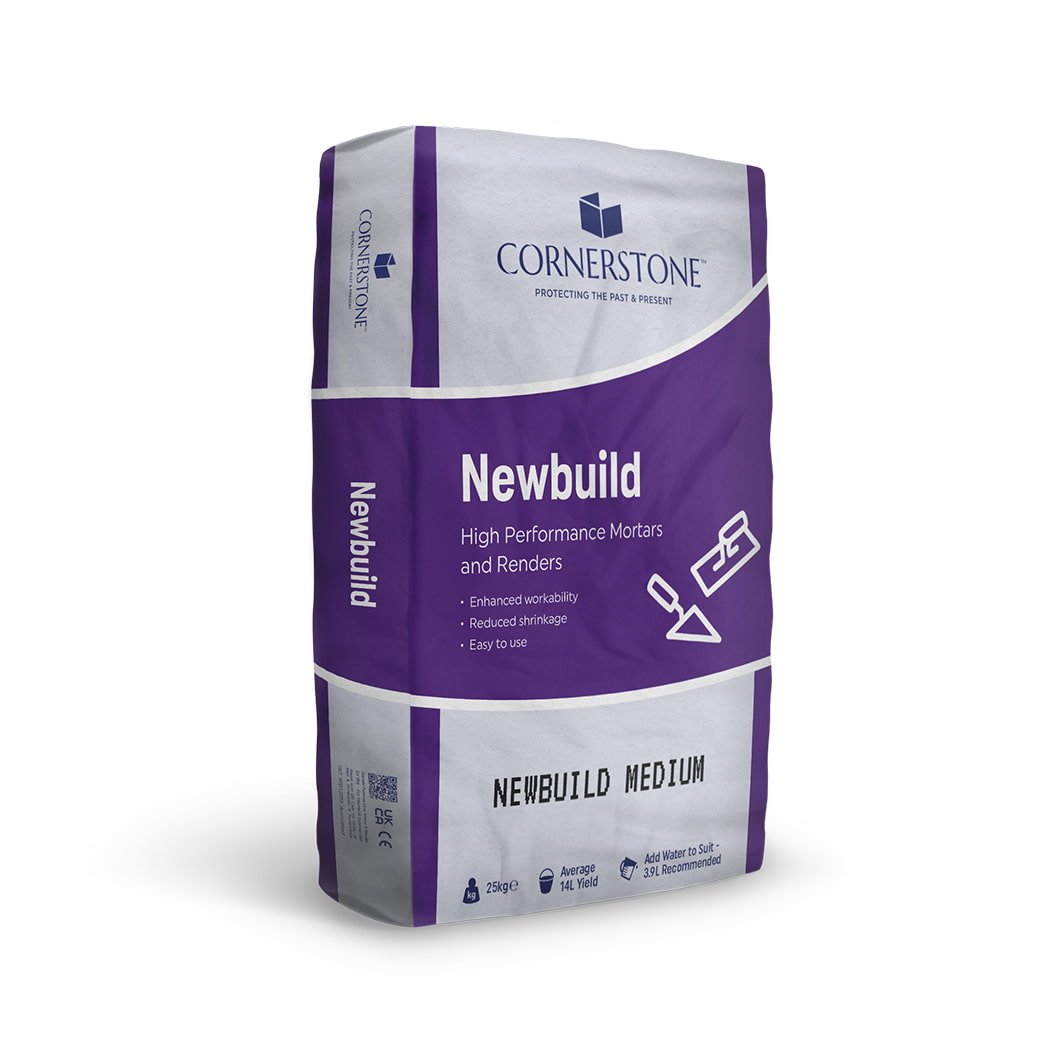
Cornerstone Newbuild Medium Mortar and Render
A multipurpose hydraulic lime mortar & render with a medium texture & buff finish for pointing.

Cornerstone Newbuild Medium Cement Free Mortar
A cement-free lime mortar with the strength of modern 1:2:9 mortars & a heritage aesthetic.

Cornerstone Performance Roofline Medium Fast Set Mortar
A quick-setting mortar for rooflines requiring support against slump, sag or a same day finish.

Cornerstone Performance Roofline Medium Mortar
A fast-setting mortar for above the roofline, including hip tiles or the bedding ridge.

Cornerstone Performance Scantle Mix Mortar
A fibred and flexible mortar with for bedding natural slate in traditional roof applications.

Cornerstone Performance Wintermix Mortar & Render
A multipurpose mortar and render for rapid initial strength gain to support frost resistance.

Hot Mixed Mortar CLH28
An easy-to-use light cream ready-mixed coarse hot mixed mortar for building & pointing.

Cornerstone Heritage MK Coarse Mortar and Render
A multipurpose high free-lime mortar for an ultra-breathable & porous alternative to hot mix.

Cornerstone Heritage MK Medium Mortar and Render
A multipurpose high free-lime mortar for an ultra-breathable & porous alternative to hot mix.

Cornerstone Heritage Trass Coarse Mortar and Render
A multipurpose high vapour permeability & low capillary water absorption for exposed areas.

Cornerstone Heritage Trass Medium Mortar and Render
A multipurpose high vapour permeability & low capillary water absorption for exposed areas.

Cornerstone Marine L4 Mortar
A lime mortar for exposed applications above water level, with an extended open time.

Cornerstone Marine LP6 Mortar
A natural cement and lime mortar for weaker substrates requiring a lower strength and fast set.

Cornerstone Marine LP8 Mortar
A natural cement and lime mortar for masonry requiring an NHL-strength mortar but a fast set.

Cornerstone Marine P10 Mortar
The lowest strength natural cement mortar in the Marine range with a speedy set time.

Cornerstone Marine P15 Mortar
Our most popular water-resistant natural cement marine mortar with a speedy set time.

Cornerstone Marine P30 Mortar
A water-resistant natural cement mortar for areas requiring strength without being waterproof.

Cornerstone Marine P50 Mortar
A natural cement mortar for aggressive areas requiring high strength without being waterproof.

Cornerstone Marine P60 Mortar
A robust waterproof and chemically resistant mortar for heavily polluted environments.

Cornerstone Ultra-Low Strength Masonry Grout
Our popular lowest strength and highest breathability fine textured CL90 hydrated lime grout.

Cornerstone Low Strength Masonry Grout
A ready mixed NHL2 lime grout for the void filling and consolidation of solid masonry walls.

Cornerstone Medium Strength Masonry Grout
A fine ready mix NHL3.5 lime grout for a balanced approach between strength and breathability.

Cornerstone High Strength Masonry Grout
A ready mixed NHL5 lime grout for the void filling and consolidation of solid masonry walls.
Why use lime mortars?
Lime mortar is a traditional building material made from a mixture of lime, sand and water that has been used for millennia worldwide. Historically in the UK, it’s not uncommon to find masonry buildings constructed with stone, brick, or cob were built with lime mortars.
Known for its breathability, flexibility and durability, lime mortar has long played a critical role in the restoration and conservation of solid-walled buildings, where inappropriate materials can lead to damage that can be difficult to repair or even irreversible.
Unlike modern cavity wall construction, which features an outer layer and air gap designed to keep out moisture, solid-walled buildings require breathable materials to manage the moisture always present within the building fabric. As a result, cement-based mortars are unsuitable for these buildings as they are impermeable, often trapping moisture within the structure instead of allowing it to move or be released. As a result, common issues often found in historic to early 20th-century buildings arise, such as condensation, damp, mould, decay or masonry degradation as the moisture forces its way through the porous stone or brickwork to escape.
Further, traditional buildings often move and settle, which the brittle and rigid cement mortar can’t accommodate, creating additional stresses to the structure due to their incompatibility with soft brick or stone. The result can be the spalling of the masonry or cracking of the mortar itself. On the other hand, lime mortars are softer, flexible and porous, making them a compatible and sympathetic material that is both permeable and capable of accommodating movement and protecting the long-term health of the building fabric and masonry.
While lime mortars and their terminology may seem like a labyrinth compared to cement, there are two main categories of lime mortar to consider for most projects.
There are two main categories of lime mortar, known as Hydraulic and Non-Hydraulic lime mortars. These categories differ primarily in their setting process and applications. Hydraulic lime mortars contain impurities that enable them to set through a chemical reaction with water, allowing them to harden even underwater or in damp conditions, making them suitable for environments continuously exposed to moisture. We stock a range of dry ready mixed lime mortars made with hydraulic limes, including natural hydraulic lime.
On the other hand, non-hydraulic lime mortars harden through a carbonation process, which involves reacting with carbon dioxide in the air; this process also requires damp conditions and takes longer, but they end up as weaker more flexible materials, making them ideal for interior and historic restoration work where breathability and flexibility are crucial. We stock a range of non-hydraulic lime putty mortars, renders and plasters.
Today many are discovering that the properties of lime mortar can also benefit standard cavity wall construction. Lime mortars can assist with moderating humidity, reducing energy demand, and supporting more sustainable building practices by managing moisture and accommodating building movement, which, most importantly, helps to create longer-lasting and healthier buildings.
Our extensive selection of premixed lime mortars features a range of solutions for building conservation, renovation or modern new build construction. Need help with choosing before you buy? Our in-house expert team can help advise on suitable lime mortars for your next building or pointing project. Buy online or open a trade account with convenient local and nationwide delivery available.
Need support? Get in touch with the team.
Get In TouchFAQs
Lime mortar is a versatile material that is used in a wide range of applications. For historic to early 20th-century buildings with solid walls and no cavity, lime mortar is strongly advised to assist with managing moisture within the building fabric. Lime mortar can also be used in new build applications with a cavity. However, these are typically stronger limes with hydraulic properties. We stock the Cornerstone New Build Range, explicitly designed for new build construction.
If you are involved with or own a traditional solid wall building, you’ll likely require a renovation that requires compatible and sympathetic materials, such as lime mortar. Many names are used for lime, making it a topic that can be confusing or intimidating. To keep it simple, there are two main categories of lime mortar, primarily distinguished by the way they set. Limes that harden through a chemical process called hydration are known as Hydraulic Lime Mortars. These can include Natural Hydraulic Lime, Formulated Lime or Hydraulic Lime. Limes that have no chemical set and rely on carbonation are known as Non-Hydraulic Lime Mortars. These can include Lime Putty, CL90 Quicklime or CL90 Hydrated Lime.
Lime and cement are both excellent materials; one is not ‘better’ than the other. Rather, they are two binders used in different applications and building methods. Lime mortar is more appropriate for heritage and conservation projects than its cement counterpart and has long played an essential role in repairing and restoring solid-walled buildings.
There is no ‘best’ or ‘one size fits all’ mix for lime mortar. We always advise that each project is unique, and the mix should be application specific. Another option instead of mixing on-site is to use a premixed lime mortar. When choosing a premixed lime mortar, review the features and application guidance, as these materials are often specially designed for performance in particular applications.
Lime mortar can help better manage moisture problems, but to claim it stops damp is an overstatement. Lime mortars allow moisture to move in and out of solid wall construction, helping to reduce moisture build-up within the building fabric by better managing internal condensation and reducing moisture penetration from the external environment. Remember that there are many causes of damp, so while using a lime mortar might be beneficial, determining the cause of the damp and considering the options to correct it is the best first step.
Using a breathable lime mortar supports moisture to travel and escape from the masonry joints instead of the masonry itself, acting as a sacrificial element to help preserve the stone or brickwork. When stone or brick walls are paired with a rigid non-breathable mortar, the wall’s ability to diffuse moisture becomes compromised. Since this moisture can’t escape through the mortar in the joints, it forces its way through the porous stone or brickwork, which can cause masonry degradation or decay.