

Understanding different backgrounds for a lime plastering
When it comes to renovation projects, one of the most frequent questions we encounter is how to work with various background substrates and lime plaster.
So, whether you’re looking to tackle a few repairs or a full renovation, this guide will examine the pros and cons of the most frequently asked-about backgrounds and a few practical insights to help you plan and prepare for your next lime plaster project.
Before getting started
For projects with the opportunity to select the ideal substrate, balancing breathability, insulation, and budget is more than achievable. For projects where the original or existing substrate is what you’ll be working with, the best approach is to assess the condition and suitability of what’s there and adapt the plan accordingly.
For those undertaking conservation or restoration work, using lime plaster on historically appropriate backgrounds maintains the integrity and authenticity of the building. Where possible, we always encourage maintaining the historic building fabric and the often unique and quirky character of the traditional buildings where possible.
If the building is listed, listed building consent will be required for anything which might affect its character as a building of special interest. For more information on listed buildings, read our introductory article, What is a Listed Building? Meaning & Key Examples or visit the Historic England website for a range of helpful resources and information.
Browse our range of lime renders and plasters

Wood wool boards
Wood wool boards are popular for new build and heritage construction. They are generally composed of a combination of pieces or fibres of wood wool and a binder, such as cement, to create a compacted mineralised board. Wood wool boards are typically suitable for internal or external applications, including walls, partitions, and ceilings, but this can vary depending on the manufacturer.
Pros
Cons
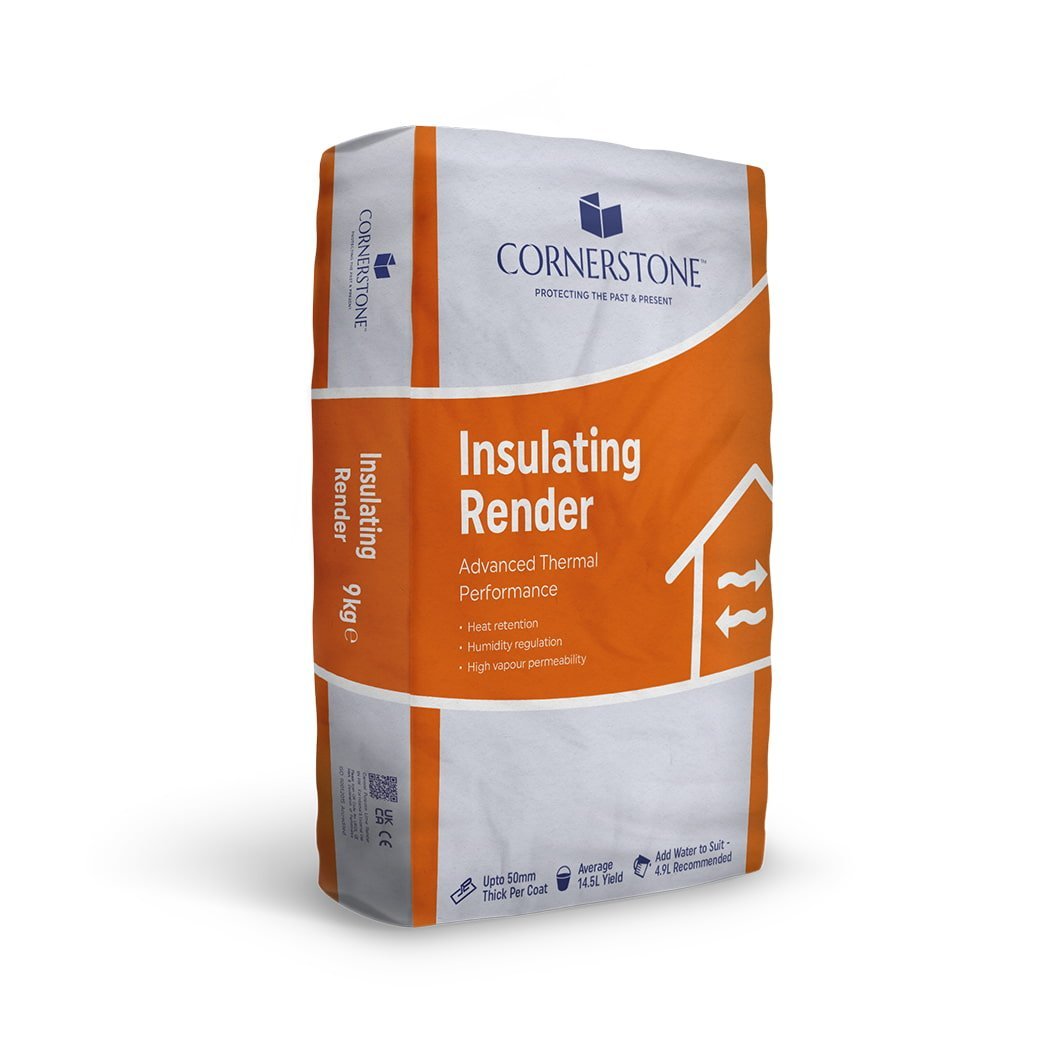
Several brands are on the market, but here at Cornish Lime, we stock CELENIT N. We typically advise using the 25mm boards externally and the 15mm or 25mm boards internally. We recommended pairing Celenit N with Cornerstone Insulating Render as part of a boarded insulation application.
Composite wood wool boards
Composite wood wool boards are generally composed of of two or three layers of wood wool and a layer of an insulating material. As a result, these boards add additional insulation and soundproofing than a standard wood wool board can provide.
Pros
Cons
Several brands are on the market, but here at Cornish Lime, we stock CELENIT L3AB/A2 Insulation Boards. These boards are composed of two thin layers of wood wool and an internal layer of high-density mineral wool insulation.
We recommend pairing Celenit L3AB/A2 with Cornerstone Insulating Render and a fine or superfine topcoat, such as our CLM66 Premium Lime Putty Plaster or Cornerstone Promix Superfine Plaster.
Get started with our CELENIT L3AB/A2 application guide
A quick top tip
When choosing or specifying wood wool boards, we recommend keeping an eye on the fire rating, insulating or U-values, breathability, and strength. Further, check for water repellency, which can make applying lime plaster more challenging.
Wood fibre boards
Wood fibre boards are generally composed of untreated wood waste from the timber industry, including chips, sawdust and other bits and pieces. This raw material is then typically broken down into a fibrous material that can be formed into boards or panels. Wood fibre boards are typically suitable for internal or external applications, including walls, partitions, and ceilings, but this can vary depending on the manufacturer.
Pros
Cons
Generally, we advise against using wood fibre boards with lime render or plaster. While these boards can feature impressive insulation properties, they can often be limiting when looking for a lime render or plaster to pair them with by requiring a proprietary render to bond to them effectively.
Further, additional consideration is frequently needed for managing moisture, especially in areas with consistent water exposure. Poor moisture control can lead to deterioration or decay, so a non-breathable or water-repellent render is often required, which is unsuitable for traditional or historic solid-walled construction.
Lastly, we typically advise a sufficient overhang from the roof, and readjustments for windows are essential if wood fibre boards are considered as part of external insulation.

Cork insulation boards
Cork insulation boards have become increasingly popular among those seeking natural materials to enhance the energy efficiency of buildings. Generally composed of cork bark, the materials are processed and formed into solid cork boards or panels.
Pros
Cons
Cork insulation boards are typically suitable for internal or external applications, including walls, partitions, and ceilings, but this can vary depending on the manufacturer.
Similar to wood fibre boards, we generally advise against using cork boards with lime render or plaster. They are often treated with a water-repellent, which frequently requires the use of a non-breathable proprietary render to bond to them and prevent deterioration or decay if the boards get wet. Further, in our experience, we’ve often found corkboards fragile and overly reliant on the render to deal with knocks.
A quick top tip
Before planning any renovations, learn about the existing materials in your building. If your building suffers from issues such as damp, cold spots or decay, determining why first is well worth the time and effort. Understanding what you’re working with can help you choose compatible materials, avoid potential issues, and ensure the long-term success of your project.
Cement boards
Cement boards are generally composed of cement and reinforcing fibres, which are formed into boards or sheets. A staple in the construction industry, cement boards are great budget-friendly and versatile materials for contemporary or newbuild construction. For lime-based products, cement board is unfortunately not a substrate we would recommend.
Pros
Cons
Generally, we advise against pairing cement boards with lime-based products, especially for heritage projects that need to renovate a traditional solid-walled building or projects requiring a high level of breathability.
It may be possible to utilise cement boards with lime-based products for contemporary or new build construction, but this will vary on a project-by-project basis. For options which might be suitable for cement boards, speak with the team.
Magnesium oxide boards
Magnesium Oxide boards (MgO boards) have become a leading alternative to standard cement boards and gypsum plasterboard. MgO boards are generally composed of cement, magnesium oxide, various fillers, and fibreglass mesh to create solid boards or sheets. For lime-based products, MgO board is unfortunately not a substrate we would recommend.
Pros
Cons
As with standard cement boards, we would not advise this approach for heritage projects that need to renovate a traditional solid-walled buildings or projects requiring a high level of breathability.
It may be possible to utilise MgO boards with lime-based products for contemporary or new build construction, but this will vary on a project-by-project basis. For options which might be suitable for cement boards, speak with the team.
For those interested in learning more or concerned about MgO boards, the Royal Institution of Chartered Surveyors (RICS) has written a helpful article on magnesium oxide boards that is well worth reading.
Plasterboard
We’re often asked if you can use lime plaster on plasterboard, and it’s no surprise as plasterboard is a common material found in buildings worldwide. Plasterboard is generally composed of paper and calcium sulphate dihydrate or gypsum formed to create boards or panels. It is often used alongside various modern gypsum-based plasters, usually called skim, one-coat, or multicoat plaster. For lime-based products, plasterboard is unfortunately not a substrate we would recommend.
Pros
Cons
Generally, we would advise against pairing plasterboard with lime-based products. While plasterboard allows some moisture to pass through, it does not provide sufficient breathability for traditional solid-walled buildings. Further, as plasterboard is made from gypsum, a water-soluble salt, it can dissolve and recrystallise when exposed to moisture, potentially damaging finishes.

Wooden lath
A traditional building material, wooden lath, was once the go-to material for providing a solid background for lime plaster. The application of wooden lath and plaster evolved from the ancient practice of “Wattle and Daub” and was widely used until the middle of the 20th Century before the introduction of plasterboard.
For many historic or traditional buildings, wooden lathing still functions as an excellent render carrier for ceilings and partition walls. However, wooden lathing is an expensive method of application. As a result, contemporary boards such as Celenit N are often considered a more budget-friendly option for those requiring the replacement of traditional laths.
For smaller sections, replacing the wooden lath is the ideal choice and an excellent way to maintain the methods and materials used to create the original building fabric.
Pros
Cons
For those looking for lath, our sawn oak lath is popular choice for walls requiring repairs, as the straight-grained knot timber in long and strong lengths can make fixing the lath into place easier. For ceilings, riven lath is the most suitable, with a textured fibrous surface that provides a far superior key for ceilings.
Are you looking for a lime render for lath? Learn more about Cornerstone Woodlath Render
Expanded metal lath (EML)
While Expanded Metal Lath is a common material for cement or gypsum plasters, we generally advise against its use for traditional lime plasters.
What is expanded metal lath? Often made of stainless or galvanised steel, an expanded metal lath can is typically a diamond-shaped mesh used as a base for applying gypsum plaster in contemporary construction. When paired with lime renders or plasters, many issues can arise. As such, we typically advise against the use of expanded metal lath and lime plasters.
Pros
Cons
If a lime plaster is considered, the material will need to be very hydraulic to bond sufficiently to the metal. A typical specification includes a hydraulic lime of no less than an NHL5 at a ratio of 1:2 binder:sand by volume. However, a lime and cement blend like St Astier’s Tradiblanc would be better suited. This type of specification would also be unsuitable for most heritage or conservation applications.
When expanded metal lath is paired with traditional lime-based plasters, bonding, hardening, and the finish can become problematic. Lime plasters carbonate over time and become no longer alkaline once reacted, making the EML no longer passivated like it would with cement.
Further, the lack of suction from a substrate means that a lime plaster may take a significant time to harden, and ghosting of the metal lath can occur where water condenses around it.
Summing it up
Understanding the characteristics of various background substrates is essential for making an informed decision on what to pair with lime plaster. Before you start, ensure you or your contractor have considered the building’s original materials, the goals or results you want to achieve with this new plaster application, and where your budget can best be spent. When in doubt, always consult a professional and remember that every project is unique.




If I have an old painted lime wall.
Can I use a stabiliser and re lime over the top.
Hi, Thanks for getting in touch.
We’ve sent a reply by email so that you can give us some further information.
Best wishes, Justine