

Understanding listed buildings and their classifications
Listed buildings are an essential part of our heritage, protecting structures of special architectural or historic interest for future generations. But what exactly does being a “listed building” mean?
This article explores the meaning of listed buildings, the different levels of listing, and provides some key examples of listed buildings in the UK for your reference.
What does “listed building” mean?
The term “listed building” refers to a building that has been placed on the National Heritage List for England. This designation is given to buildings of special architectural or historic interest, ensuring their preservation for future generations.
When a building is listed, it means that it is recognized as having national importance and is legally protected from being demolished, extended, or altered without special permission from the local authority.
Listed buildings are often recognized for their national importance due to their special architectural or historic interest. The purpose of listing is to protect these buildings so they can be preserved for future generations. Here are a few key points to understand what listing a building entails:
Protection of historical integrity
Listed buildings cannot be demolished, extended, or altered without special permission from the local planning authority. This ensures any changes respect the building’s historical and architectural significance.
Assessment criteria
Buildings are listed based on age, rarity, architectural merit, and significance in a historical context. For example, buildings older than 30 years may be considered, but those older than 50 years are more likely to be listed.
Legal obligations
Owners of listed buildings must obtain listed building consent for any work that affects the building’s character. This applies to both external and internal modifications, ensuring that the building’s special interest is preserved.
Understanding these points helps clarify that being a listed building means more than just being an old or traditional historic landmark; it involves a formal recognition of its value and a commitment to its preservation.
Different levels of listed buildings
In line with Historic England regulations, listed buildings are classified into three grades, each reflecting their relative importance.
Grade I
These are buildings of exceptional interest. Only 2.5% of listed buildings are Grade I. Examples include Buckingham Palace and the Royal Albert Hall.
Grade II*
These are particularly important buildings of more than special interest. Approximately 5.5% of listed buildings are Grade II*.
Grade II
These are buildings of national importance and special interest. About 92% of listed buildings fall into this category. Examples include many private homes, public houses, shops, and public buildings like libraries and schools.
How are listed buildings chosen?
Listed buildings undergo a particularly careful selection process, based on their architectural and historic interest. The decision is made by either Historic England, an organisation dedicated to protecting and preserving England’s historical environment, or by the Secretary of State for Culture, Media and Sport, depending on the type of building or site. Criteria includes the property’s building type or site, age, rarity, architectural merit or social, economic, or cultural context.
Key examples of listed buildings & landmarks
Here’s a quick look at some notable listed buildings, ranging from Grade II to Grade II from across the UK.

Buckingham Palace (Grade I)
Buckingham Palace is one of the most iconic Grade I listed buildings, serving as the official London residence of the British monarch since 1837.
Originally Buckingham House, it was redesigned by architect John Nash to become a royal residence for George IV. Buckingham Palace stands as a symbol of British history and heritage.
Grade: I
Date first listed: February 5th, 1970
Location: Westminster, London

Royal Albert Hall (Grade I)
The Royal Albert Hall is a Grade I listed building known worldwide for its architectural innovation and cultural significance. Located in London, it has hosted countless notable events and performances.
The building’s list entry was updated in 2018 to mark the centenary of the 1918 Representation of the People Act.
Grade: I
Date first listed: February 24th, 1958
Location: Kensington, London

St. Enodoc Church (Grade 1)
Nestled off the rugged north coast of Cornwall is the remarkable Grade I listed St. Enodoc Church. Sometimes referred to as Sinking Neddy, this 12th-century church famously found itself buried in the sand for three centuries due to the nearby shifting dunes.
The church is still open today for services, and many visitors might enjoy hiking the footpaths for seaside views or playing golf at St. Enodoc Golf Course.
Grade: I
Date first listed: June 6th, 1969
Location: Trebetherick, Wadebridge
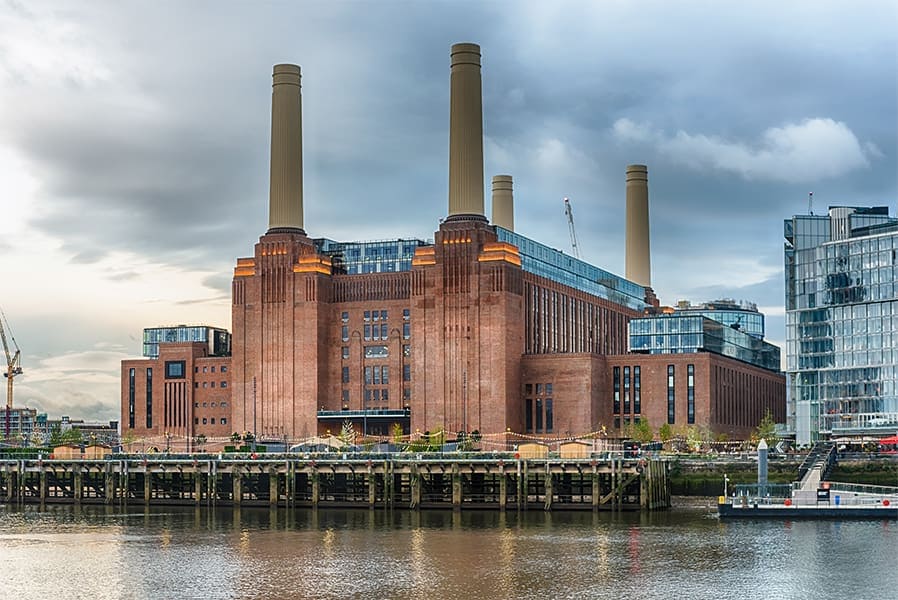
Battersea Power Station (Grade II*)
Battersea Power Station is a Grade II* listed building, noted for its striking Art Deco design. This decommissioned coal-fired power station is a prominent landmark on the London skyline and a prime example of inter-war utility architecture, designed by a leading architect of the era.
According to the Art Deco Society UK, the station has been showcased in various media formats, from fashion shows to the film Monty Python’s The Meaning of Life.
Grade: II*
Date first listed: October 14th, 1980
Location: Wandsworth, London

Tresillian House (Grade II)
Tresillian House is a Grade II-listed manor house known for its Cornish charm and the lush greenery of its 22 acres, including a walled Victorian Kitchen Garden. The estate was recently featured in a new book by former award-winning BBC presenter and journalist Tim Hubbard’s book, Secret Gardens Of Cornwall.
For those looking to visit, the property and its surrounding estates can be privately rented for a range of events looking to impress.
Grade: II
Date first listed: May 30th, 1969
Location: Newquay, Cornwall

Portland Bill Lighthouse (Grade II)
The largest and most recent lighthouse of the three, Portland Bill Lighthouse, can be found on the southern tip of the Isle of Portland.
At 41 metres tall, the tapered cylindrical tower has served as a waymark for ships navigating the English Channel for over 100 years, with it’s light first lit in 1906.
Grade: II
Date first listed: May 17th, 1963
Location: Isle of Portland, Dorset
Listed buildings, period properties & conservation areas
It’s important to note that not all historic buildings are listed. A period property simply refers to a building from a particular historical period, such as Georgian, Victorian, or Edwardian, but it may not necessarily be listed.
Learn more about period properties and popular periods
Similarly, living in a conservation area doesn’t mean your home is listed. Conservation areas are designated to protect the character of a specific area, which may include listed and non-listed buildings.
| Aspect | Listed Buildings | Period Properties | Conservation Areas |
|---|---|---|---|
| Definition | Buildings on the National Heritage List for England. | Buildings from a specific historical period. | Areas designated to protect the character of a place. |
| Protection level | High – Legal protection against changes without consent. | Varies – Not legally protected by listing. | Moderate – Controls over development and alterations. |
| Consent required for changes | Yes – Listed Building Consent required. | No – unless also listed. | Yes – For significant changes, typically via local authority. |
| Criteria for inclusion | Special architectural or historic interest. | Age, style, or historical context. | Overall character and appearance of the area. |
Understanding these differences helps clarify the unique status of listed buildings and their role in preserving our national heritage. If you own or are thinking of buying a listed building, it’s important to be aware of the responsibilities and seek appropriate advice to maintain its special architectural or historic interest.
Tips for owning a listed building
Owning a listed building comes with both privileges and responsibilities. Here are some tips for those who own listed buildings, helping to ensure that you can make the most of and correctly preserve the historic property you own.
1. Stay on top of regular maintenance
Staying on top of regular maintenance is part and parcel of owning an older property. Proper maintenance can prevent small issues from becoming significant problems. This includes checking roofs, gutters, and drainage systems to avoid water damage.
A quick top tip
When considering maintenance projects, keep an eye on your garden too. Certain plants, such as the Buddleia, can damage masonry and brickwork, pushing their way through over time and leading to unnecessary repair costs.
2. Understand legal obligations & listed building consent
Owning a listed building comes with additional rules and guidelines that must be followed when planning any changes or improvements to the property. Familiarise yourself with the legal obligations and restrictions and understand what changes are permissible and what requires consent. Any alterations, extensions, or demolitions require listed building consent from the local planning authority. This ensures that changes do not compromise the building’s special interest. Keep in mind that Listed Building Consent is not the same as Planning Permission, so be sure you have considered both before undertaking a significant project.
3. Get expert advice for repairs or renovations
It’s advisable to seek expert advice for any repairs, such as mortar matching services, to maintain the building’s integrity and ensure that restoration work is sympathetic to the original structure.
Get started with a mortar match
Match the components, colour and texture of a mortar to help preserve a building’s historic charm.
4. Use sympathetic materials
Ensure suitable products to preserve the building’s historic fabric and prevent any damage that might compromise its structural or aesthetic value.
Browse our range of lime mortars
5. Stay informed about grants and funding
Explore grants and funding options available for the conservation of historic buildings. Various organisations offer financial support for maintenance and restoration projects. By following these tips, you can ensure that your listed building is preserved for future generations while enjoying the unique charm and history it offers.
Summing it up
Understanding the meaning of a listed building is crucial for appreciating the importance of preserving our national heritage. Whether it’s a Grade I landmark like Buckingham Palace or a Grade II residential property, each listed building tells a unique story. By protecting these buildings, we ensure that future generations can enjoy and learn from our rich architectural and historical heritage. If you work with, own or are thinking of buying a listed building, it’s important to be aware of the responsibilities and seek appropriate advice to maintain its special architectural or historic interest.


