

Cleaning a gravestone with expert tips from Steve Davies
Gravestones serve as lasting tributes, honouring the lives and legacies of individuals to be remembered for generations to come. However, as the decades pass, the elements can take their toll. Issues like cracking, staining, or erosion can impact their appearance and stability if left unchecked.
In this article, we will outline the key steps to cleaning a family gravestone, from planning and permissions to safely cleaning different stone types, with expert tips from our guest author and qualified memorial mason, the Military Grave Restorer, Steve Davies.
The purpose of cleaning
For many, tending to a gravestone is a personal and meaningful task; for others, it’s a way to honour cultural traditions and protect local heritage. As a former soldier, Steve’s work with charities and community organisations across the United Kingdom is a way to commemorate and honour the lives and public service of unsung heroes as he uncovers and restores often forgotten and neglected graves.
For many families, gravestones are cherished places to reflect, mourn and celebrate memories. Yet, like any manufactured structure, they’re vulnerable to the elements and can deteriorate over time. Research, collaboration, and a careful approach can help preserve a family gravestone and create an opportunity for remembrance.
As Steve explains, “I hope that, for many generations to come, caring for and maintaining graves is seen as more than just conservation, it’s deeply meaningful work. There’s something profoundly satisfying about showing we still care. Honouring lives speaks to every one of us.”
Before we dive in, let’s take a quick look at the types of gravestones, markers and memorials you’re likely to spot.

Types of commemorative markers
Gravestones, headstones & markers
Understanding the terminology isn’t essential, but it’s worth noting a few key differences between the types of gravestones. Generally, the term gravestone itself is broader term that can include the two most common types of gravestones you may see, the marker and the headstone.
A marker is a general term for smaller raised or flat plaques of various shapes and sizes or even simple gravestones. A headstone is a type of gravestone that most people picture first. Usually placed at the head of a grave, it displays the person’s details and often includes an epitaph or decorative elements.
Fun fact, there was once a historical distinction between the gravestone and the tombstone, a tombstone was the stone lid of a coffin and a gravestone was the laid-flat stone on a grave. For clarity in this article, we’ll use gravestone throughout.
Monuments & grave memorials
Monuments or memorials are typically larger structures that commemorate a group, person, or event. These may include statues, plaques, and even architectural features like buildings, columns, or fountains. The Battle of Britain Memorial near Folkestone, Kent, which overlooks the white cliffs of Dover is a well-known example and popular tourist attraction.
While you might see and appreciate these impressive structures, you wouldn’t clean them yourself. They are carefully protected and maintained by specialist organisations and professionals. Many grave memorials and gravestones can also be Listed (Scheduled Monuments) and are nationally protected landmarks. Even with the best intentions, it’s a criminal offence to carry out work on them without the necessary consent, which is generally granted not by the cemetery or churchyard, but by the local council planning authority.
Planning & preparing
As they say, failing to plan is planning to fail. Cleaning, maintenance and restoration can take different forms, depending on the goal. Sometimes, the objective is to restore the gravestone back to its original condition. In other cases, natural weathering and aging is an integral part of a gravestone’s aesthetic and history and should be preserved. Before you begin, be sure you and everyone involved are on the same page as to what you want to achieve.
Next, it’s important to understand that various factors will influence the best way to proceed. Factors like age, weathering, material, location, size, accessibility, budget, and even cemetery guidelines can all influence how best to proceed. With that in mind, here’s how to get started.
Make sure you have permission
Before you begin cleaning a gravestone, you must make sure you have the appropriate permissions. The maintenance and safety of the grave is the responsibility of the deedholder. Establish and confirm with the burial ground management who is the deedholder. Once the deedholder is confirmed, the next step is to confirm with the cemetery or churchyard about the type of maintenance work deedholders are permitted to carry out and who to contact in order to so.
Different cemeteries and churchyards will have policies that vary, generally everyone involved will need to know if you are a grave’s rightful legal deedholder.
For older graves with no living deedholder, it’s usually a case of showing how you are a descendant or “Living Heir” of an earlier deceased deedholder and that you want to become the new deedholder. If you’re not a direct living heir and/or if there’s no other living or traceable relatives, this will need to be discussed and resolved with the cemetery or churchyard manager.
For any other gravestones, of which there is no family connection, it’s important to keep in mind that unless that gravestone is declared a ‘public grave’, a formal recognition that it is no longer owned by anyone, then legally, even a very old grave is owned by someone.
A tip from Steve
Obtaining the correct permissions is essential, not optional. Before you start, look online at a cemetery or churchyard’s website for information about the type of maintenance work deedholders are permitted to carry out and who to contact for permission.
Stay safe and plan your route
Cemeteries can be beautiful and peaceful places, rich in history and nature. However, they often have winding pathways, uneven ground, sunken hidden graves and tree roots that can create tripping hazards. Plan a safe route to and from where you’re working, stay alert and tread carefully. It’s the burial-ground manager who has responsibility for overall public safety in a cemetery, so ensure you notify them of your plans, route and any planned work before it takes place.
Cemeteries can be hazardous, so planning for safety is essential. Keep your mobile phone charged and within reach, especially if you’re working alone or away from a group. Even if the gravestone you’re cleaning appears upright and stable, others nearby may not be, creating a serious risk. People have been seriously injured and killed by toppling gravestones which can weigh tonnes!

Determine the material type of the gravestone
Gravestones are crafted from various materials, each selected for various qualities, such as durability, aesthetic appeal, and suitability for ornamentation, such as engraving. Below, we explore the range of materials you might encounter here in the United Kingdom.
Limestone
Limestone is a sedimentary rock primarily composed of calcium carbonate. It is a remarkably versatile material and can be found used to build several things, from monuments to historic buildings and landmarks worldwide. Easily transformed from raw material into blocks, columns, statues, and more, it is obvious why limestone remains an impressive and elegant stone for remembering those who have passed.
Granite
Granite is a coarse igneous rock composed of quartz, feldspar, and mica. Often chosen for its durability and resistance to weathering, granite has long been a popular material, especially for preserving detailed inscriptions and designs. The front face is often polished to achieve a smooth, glossy surface, which provides a barrier between the stone and the elements. In contrast, the back and sides typically retain a rough texture, which can create a natural habitat for vegetation and insects, soften a gravestone’s formality and frame its polished surfaces with verdant living flora.
Marble
Marble is formed through the recrystallisation of carbonate minerals, primarily calcite and dolomite. Marble can feature a striking range of colours and patterns determined by the minerals present in the stone. However, it’s the distinctive white marble we often see on display in prominent public spaces or idyllic cemeteries. As a soft and porous stone, marble can be vulnerable to weathering due to acid rain, staining and scratching.
Slate
Slate is a fine-grained, metamorphic rock formed under low-grade metamorphic conditions. Slate is a laminated rock composed of distinct and repetitive layers. While the quality of slate can vary depending on the lamination and foliation of the rock, this material is resilient in various weather conditions.
Here in Cornwall, slate has been quarried for centuries and can be found in the cemeteries of sleepy little villages all across the county. According to the Geological Society, the slate found in Cornwall often shows that the mud that formed the slate was originally deposited in the sea around 400 million years ago.
Sandstone
Sandstone is a sedimentary rock primarily composed of sand grains, typically quartz or feldspar, which create a range of earthy, warm tones. A softer and permeable rock, which can make it vulnerable to weathering and surface deterioration over time. Acid rain can also speed up this process, causing the loss of definition in decorative elements and inscriptions.

Do a thorough visual assessment
Before you start cleaning, conducting an initial assessment helps you approach the task safely and responsibly.
If a gravestone appears to be leaning, wobbling or unstable in any way, don’t attempt to touch it. Heavy stonework can shift with very little pressure and poses a real risk of injury. Instead, report this promptly to burial-ground manager. Reinstating or making an unstable gravestone safe is always a job for a professional memorial mason (NAMM and/or BRAMM registered like Steve).
Once you’ve determined your gravestone is stable, brush off any loose dirt or moss and take a closer look. You’ll want to pay particular attention for signs of wear and damage, such as cracks, flaking areas, or loose surface layers. This can indicate delamination, where the outer layer of stone begins to peel or split from the main body of the gravestone. This makes the stone vulnerable to further deterioration especially from rainwater penetrating into the substrate layers. This in turn can lead to cold or frost damage and the gravestone’s top layer cracking or falling away from its underneath layer.
Delamination is a serious red flag when assessing a gravestone’s condition. Attempting to clean a gravestone in this condition can cause further or irreversible damage.
A tip from Steve
As noted in conservation guidance, any attempt to clean a gravestone showing signs of delamination can accelerate damage, potentially leading to the loss of inscriptions or even sections of the stone itself. In this case, as Steve advises, always consult a qualified memorial masonry restorer first.
After confirming the stone is stable and identifying any early signs of deterioration, the next part of your assessment is to look for biological growth such as moss, lichen, or algae other biological growth which are often well-established on older gravestones.
Cemeteries can be important habitats for lichen diversity, including rare and threatened species, so it’s important to be knowledgeable and respectful of the impact cleaning methods can have. Organisations such as Caring for God’s Acre offer several useful resources on preserving historic spaces while respecting lichen and wildlife.
It’s also worth noting that in many cases, removing lichens may do more harm to the stone’s surface than the lichens would cause. When in doubt, just leave the lichen alone, as even unintentional damage can’t be undone.
Gather your materials, tools & PPE
Proper preparation is crucial for any successful cleaning project. Using the right tools and working in favourable conditions will ensure you clean the surface effectively while minimising potential damage. To get started, you’ll need a handful of basic supplies. Keep it simple, proceed carefully, and remember that preserving the gravestone’s structure is more important that trying to make it appear pristine.
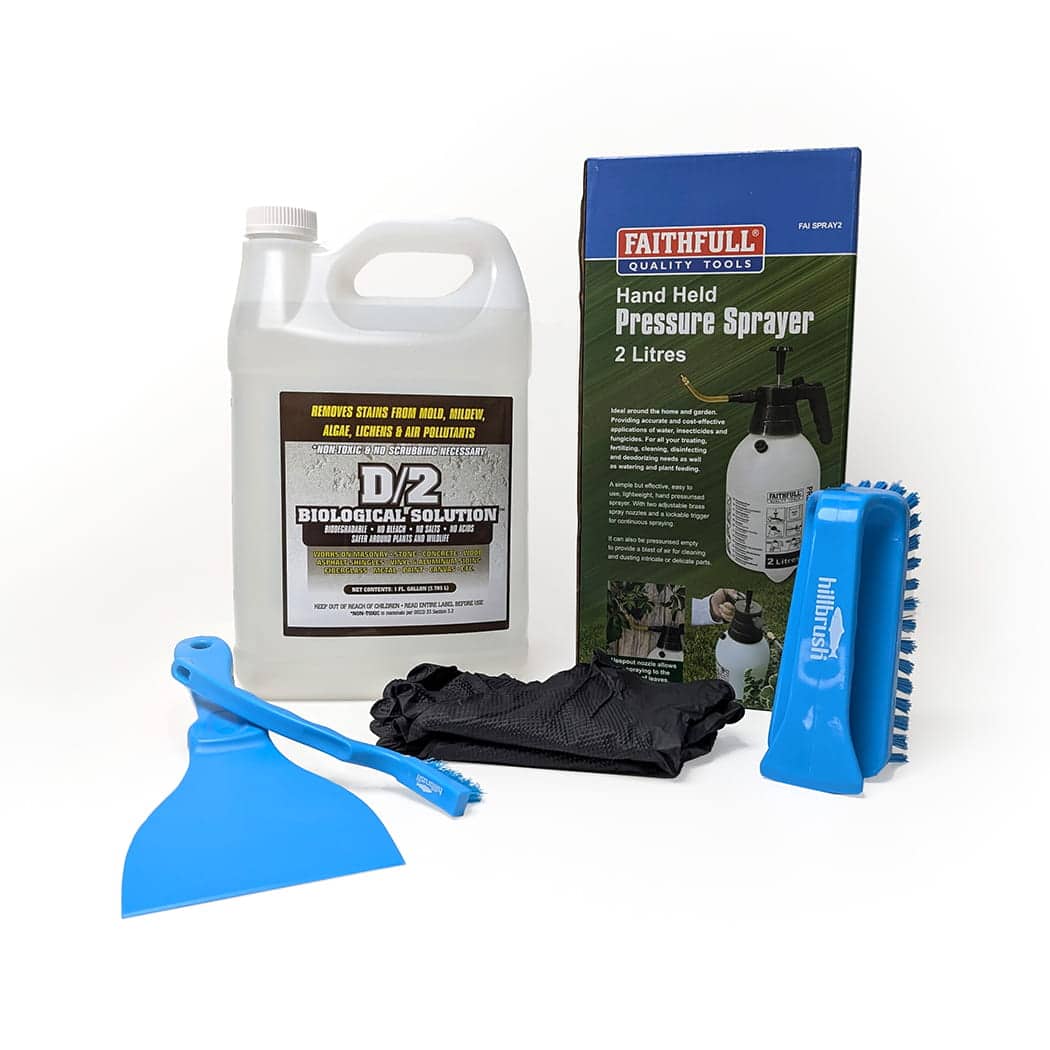
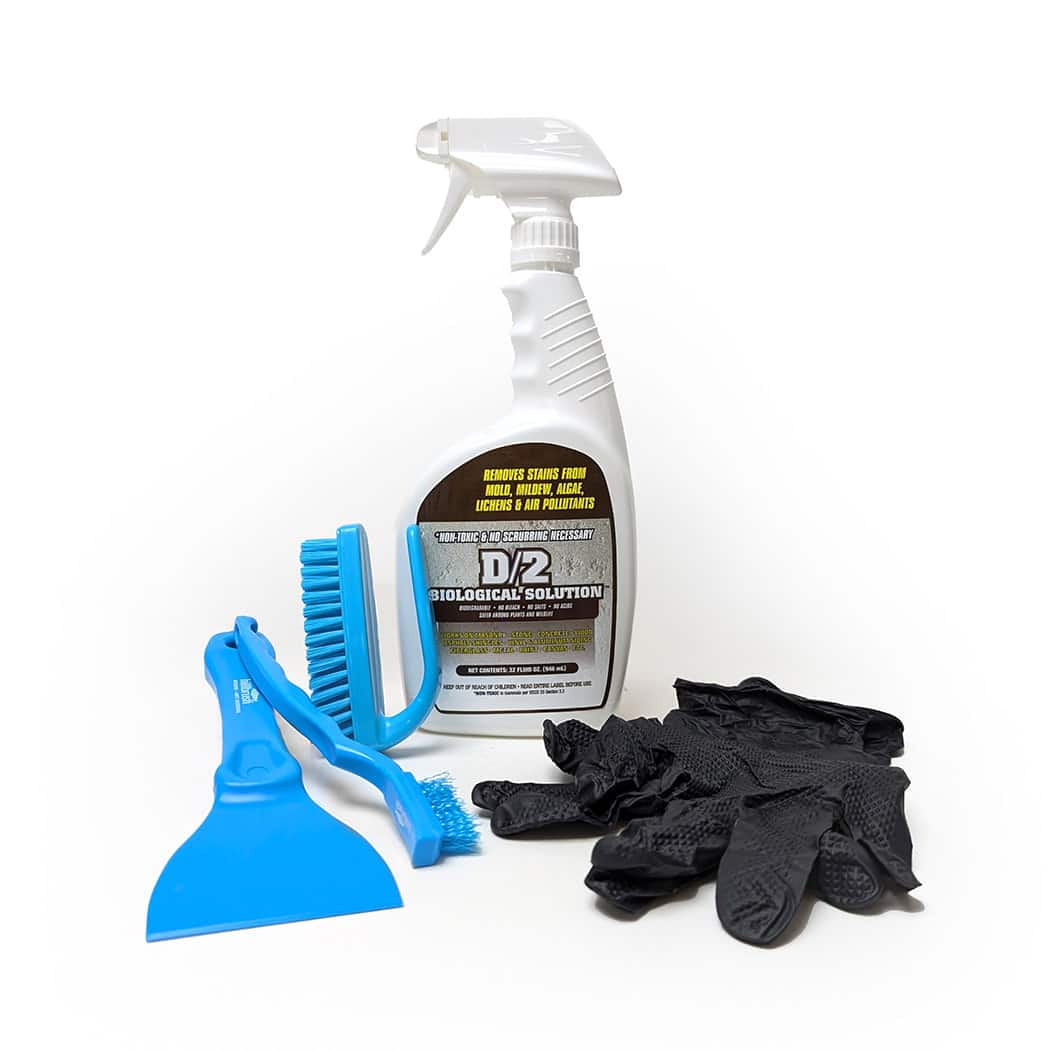
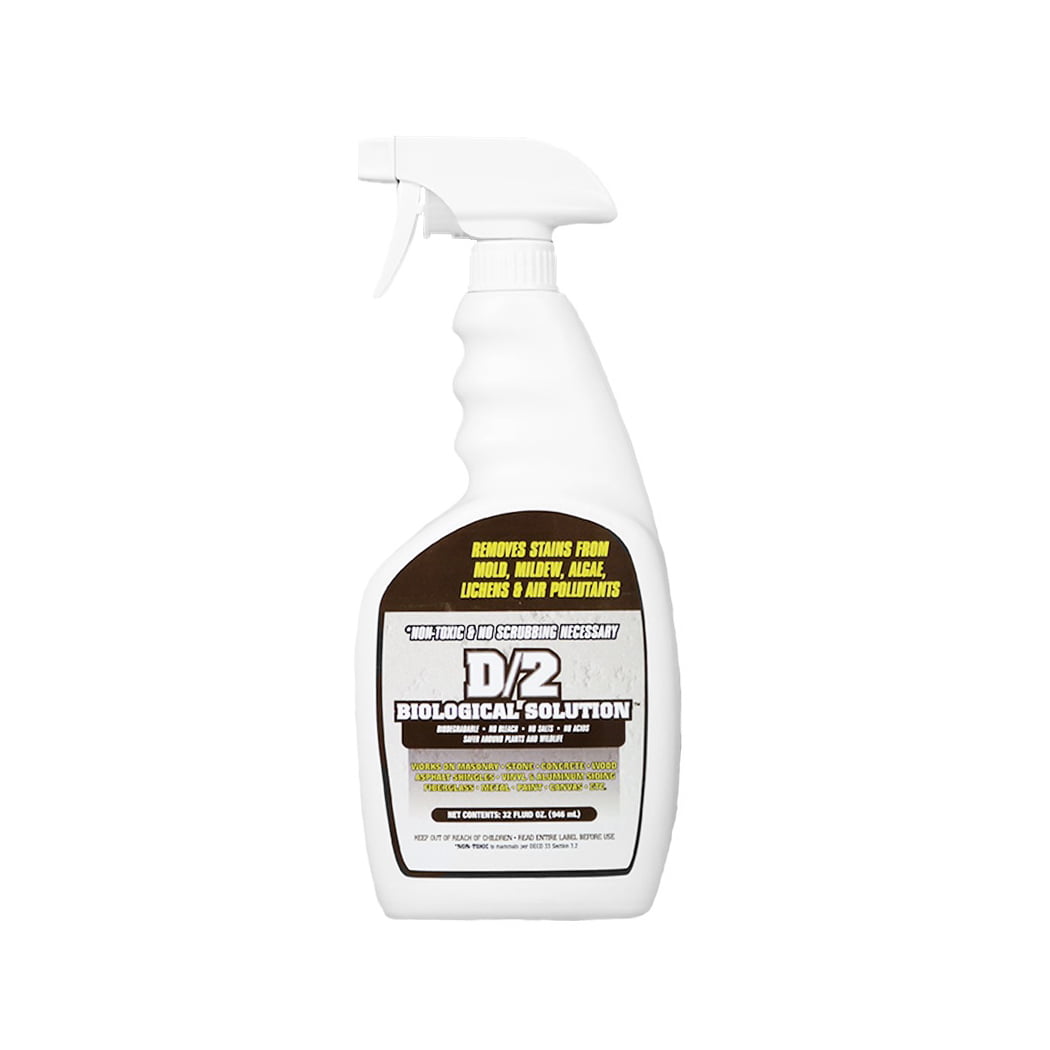
A bottle of D/2 Biological Solution
Non-hazardous and biodegradable, D/2 Biological Solution is an easy to use cleaning solution for removing biological and air pollutant staining from building materials. Available in multiple sizes to suit the scale of your project.
Learn more about D/2 Biological Solution
Clean water & a sprayer
A bucket or hose should be used with gentle pressure to rinse the gravestone and surrounding area thoroughly. Never ever attempt to jet or power-wash a gravestone. This can cause irreparable damage. For convenience, consider a gravestone cleaning kit that includes everything you need to clean headstones and grave markers safely. A handheld pump, spray bottle or low-pressure power sprayer will help you efficiently apply the cleaning solution.
Soft brushes
A few well-chosen brushes in various sizes will get the job done, helping you reach both broad surfaces and those awkward, hard-to-reach areas. Soft natural or nylon bristled brushes like are great choice. Remember to gently scrub, avoiding excessive force that may cause accidental damage. Always avoid abrasive materials or equipment, like metal brushes. If you’d like to use a scraper, opt for a non-metal scraper, such as one made from softer polypropylene.
Shop our gravestone cleaning kit
A tip from Steve
Start small and take it slow. Simple cleans are often the most effective, and D/2 Biological Solution is ideal for lifting stubborn dirt and biological staining with gentle work and a bit of time.
The cleaning process
Armed with your tools and D/2 Biological Solution, plan your cleaning on a day when air and surface temperatures are 5°C or above and no rain is forecast.
- Put on any personal protective equipment desired, such as gloves.
- Brush off any loose debris, like dirt, moss or bird droppings. A soft bristled brush or similar can be used for more stubborn growths.
- Apply the undiluted D/2 Biological Solution with the sprayer of your choice.
- Spray undiluted onto the surface and allow it to remain for 10-15 minutes.
- Apply additional D/2 as necessary to keep the surface wet.
- Mist lightly with water and continue to gently scrub areas that require it.
- Rinse thoroughly with clean potable water.
Reapply if rain falls within 12 hours, which we would be typical of the British climate where showers are never far off. D/2 works with the elements, so results may continue to develop over the course of 2-3 days.
A tip from Steve
Remember, stubborn moisture or rust stains will never be cleaned by scrubbing away at them – the gravestone will end up even more damaged. These sorts of stains penetrate deep into the stone itself and either need a specialist cleaning product or should be left well alone.

What to avoid when cleaning
While mixing and matching cleaners or trying to achieve results as fast as possible may be tempting, different cleaning products can negatively affect surfaces, even where the surface is new, stable and robust.
Avoid cleaning fragile, unstable or damaged materials
If the gravestone material appears to be fragile, unstable or damaged, consult a professional. Cleaning in the wrong conditions can exacerbate issues and make further cleaning or restoration difficult or costly.
Avoid harsh chemicals
D/2 is safe option for natural stone surfaces like marble, granite, limestone, sandstone, and slate. It’s also gentler on nearby plants, though it’s still a good idea to rinse any greenery and soil if they receive heavy exposure.
If you choose to use another cleaner, never reach for common household products or patio sprays. Acidic cleaners like bleach, diluted bleach, vinegar, or harsh detergents might be effective elsewhere, but can stain, discolour, or cause permanent damage to gravestones. Further, they can introduce harmful runoff into the natural environment that burial ground managers manage for everyone. As Steve always says, if a product works to clean a patio, then it doesn’t make it suitable for gravestones.
Avoid harsh methods and abrasive tools
High-powered pressure cleaning and excessive scrubbing can damage natural stone and polished finishes and dislodge delicate lead lettering, which can be very costly to repair. Further, never use hard and sharp tools, like metal scrapers or brushes with metal bristles, as these will strip away inscriptions and damage delicate surfaces, especially on older stones. Never use sanding or polishing-type tools or any similar power tools commonly used for grinding, cutting, polishing, and finishing materials. Stick to soft brushes and gentle rinsing methods. Remember, we always want to avoid any type of irreversible damage.
A tip from Steve
It can take hours of dedicated work to carefully clean around areas like lettering. I often use an old soft toothbrush!
Join a group and learn first-hand
Joining an established groups can offer several benefits, providing both practical knowledge and experience to cleaning legally and ethically. Consider joining a Friends [of the cemetery] group beforehand to gain first-hand experience and learn the do’s and don’ts.
Further, many groups enjoy sharing knowledge about the history and significance of the graves and sharing a sense of camaraderie that adds a greater appreciation for the work.
Summing it up
Whether you’re cleaning a large marble headstone or a small humble granite marker, caring for a family gravestone is a meaningful way to honour loved ones. For those interested in learning more about the conservation of cemeteries and historic spaces, organisations like Cemetery Friends provide excellent resources and community connections.
More about Steve Davies
What started as a personal passion has become a national movement, with Steve capturing the attention of the BBC, the Royal family and other media outlets inspired by his dedication to grave restorations. Steve is a professional BRAMM memorial mason and you can learn more about Steve on his website and checkout his interactive map to see the growing list of grave restorations he has completed nationwide.