

Interviewing the talented Master Plasterer & course tutor Sean Wheatley
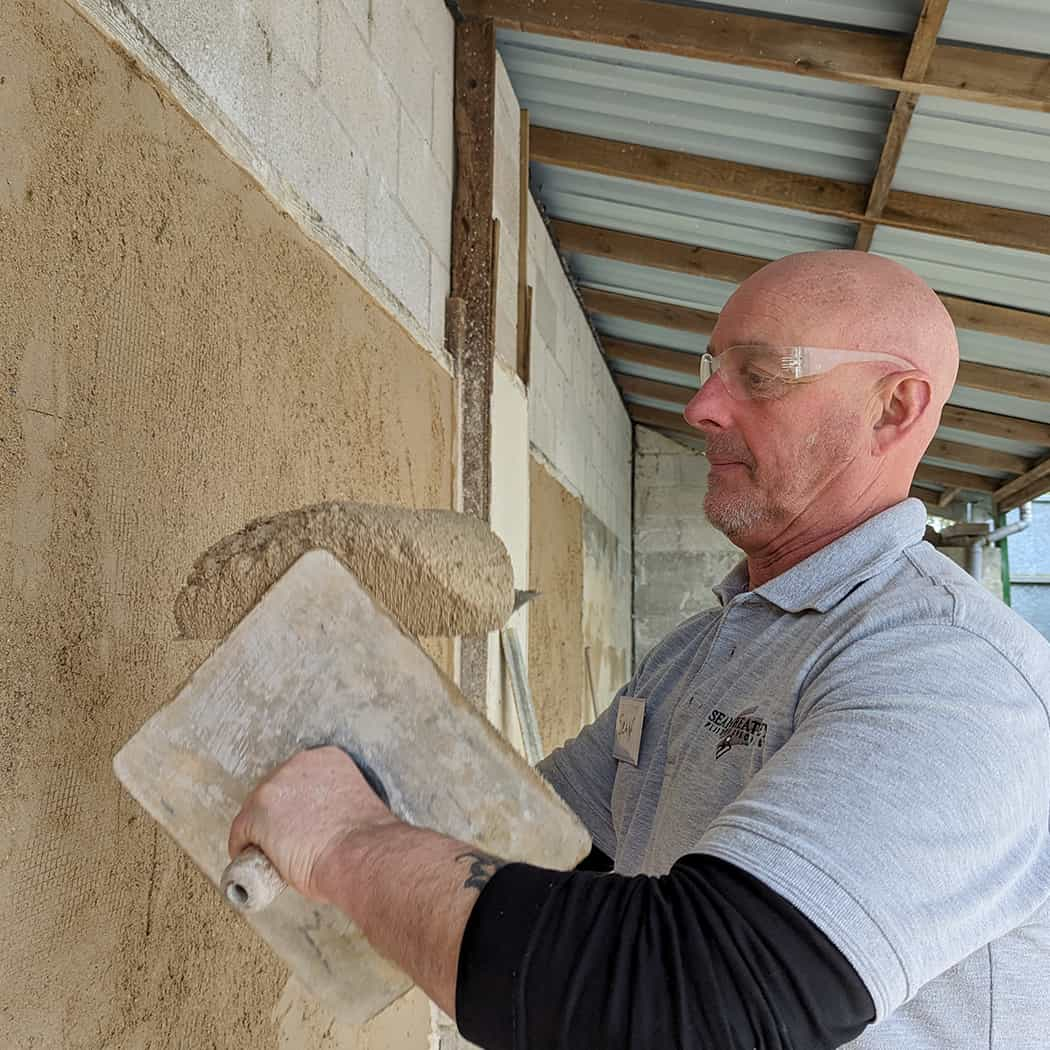
In the world of lime plastering, few names stand out like Sean Wheatley. With decades of experience and a career that has taken him across the country to some remarkable buildings, Sean has more than earned the title of Master Plasterer. In this exclusive interview, we delve into how Sean got his start, his passion for the craft, and what he sees on the horizon for the heritage trades.
Question: How did you get your start in this field?
As a teenager, I was a gymnast, and my coach was a local plastering contractor.
Question: What type of work do you find you get the most?
Virtually all of our work is now heritage and traditional plastering, but this can encompass the use of lime in renovations on period farmhouses to the installation of bespoke plasterwork in properties for clients who want to make a statement—in much the same way that our stately homes were decorated in years gone by to depict their wealth.

Question: Your team have been by your side for over a decade. How important is formal training?
Apprenticeships are vital, but none of the colleges teach heritage skills. Dan (18 years), Dom (19 years), and Jamie (3.5 years) have all completed basic modern plastering courses, but everything else has been learned on the job. I am very proud of the team that we have become.

Question: What was your favourite project to date and why?
Our Dartmouth Project in 2013. This major restoration project involved a timber-framed Jacobean house almost completely destroyed by fire. It was technically challenging because we started with 52 crates of debris, and from these, we re-created a very ornate ceiling. We entered this project for a national plastering competition, and we were judged winners of the section for Internal Heritage Solid Plasterwork. We also won the same trophy the following year for a different project.
Question: How long does it take to become a master plasterer?
I did not follow a formal apprenticeship, so my entry into the Worshipful Company was proposed and endorsed by existing members and master plasterers. To be considered, I had to provide photographic evidence of our projects from start to finish on all aspects of traditional and ornamental plasterwork and also show evidence of a minimum of 20 years of experience in the trade.

Question: What makes your job fulfilling, and what keeps you inspired to push forward?
As Chris Evans often says, “Find something you love to do, and you will never work a day in your life.” I have always found huge satisfaction in transforming an unfinished wall into a smooth, clean surface ready for decoration, and it is incredibly rewarding to be so involved in upholding traditional methods and materials.
Question: What do you see on the horizon for the heritage trades in the foreseeable future?
The heritage trades are getting stronger, with a growing understanding from architects, surveyors and conservation officers about the importance of traditional methods and materials and the reasons why they are necessary to preserve older buildings. Courses such as the ones that are run by Cornish Lime are a massive help and a start for many on the conservation journey.
View our range of courses to get started
Get started with decorative plasterwork
Join Sean to get started with running a mould in-situ, fibrous plasterwork on the bench and applying the finishing coat.
Question: What advice can you share for the next generation looking to start with decorative plasterwork?
Anyone who wants to learn this trade will need to start with a basic apprenticeship. If they have a passion for learning more, the next step would be to find a company that specialises in this type of work. Another idea would be to attend an introductory course in ornamental plastering, such as the Decorative Plaster and Running Moulds Masterclass here at Cornish Lime.
We’d like to extend a heartfelt thank you to Sean for his time and insights. Stay tuned for future interviews and insights!